Engineering and Project Management
 

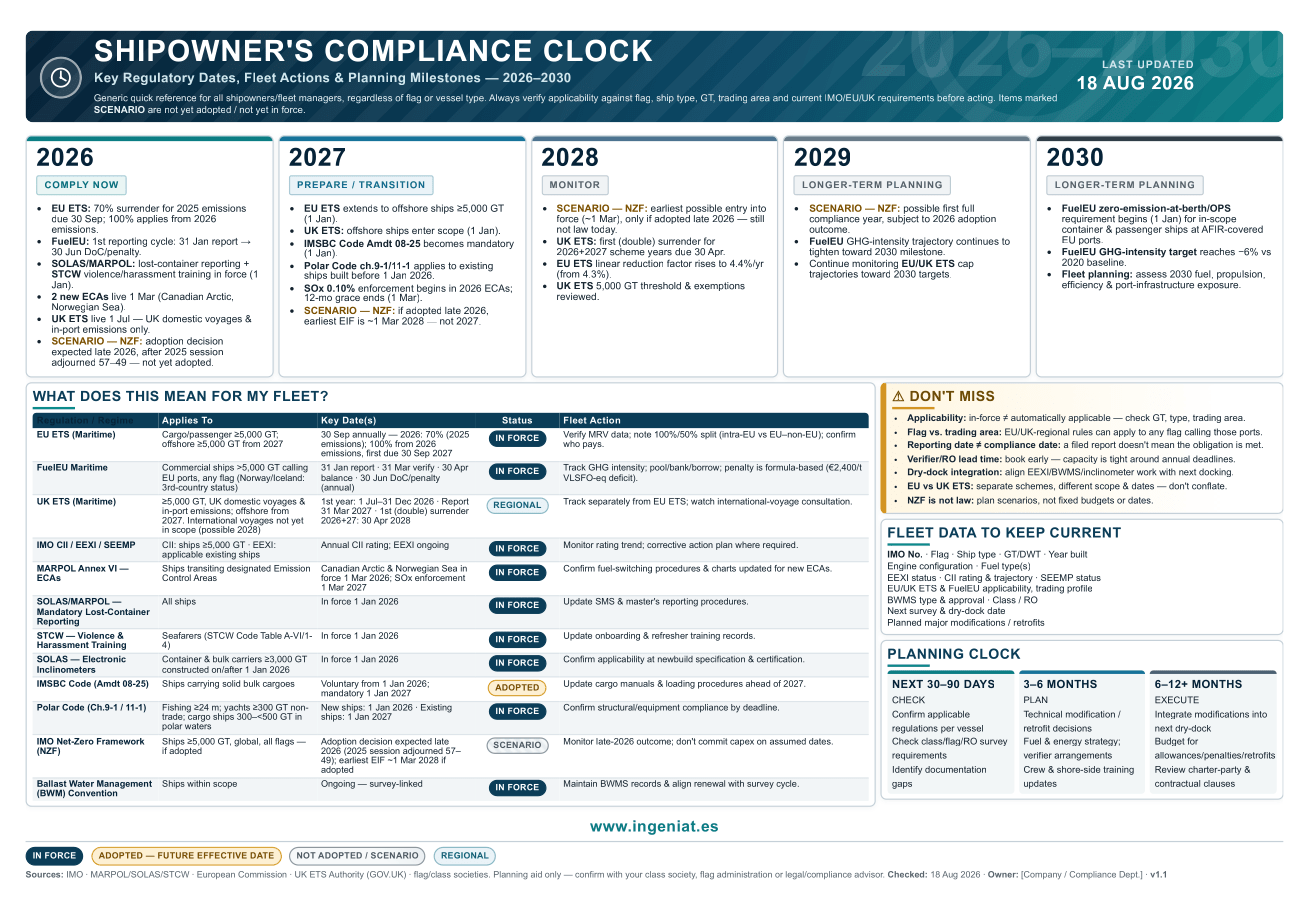
The Partial Year Trap: EU ETS Compliance When a Vessel Changes Hands

Management transfers happen every week — vessel sold, technical manager switched mid-season. In most regulatory regimes, it’s a paperwork exercise: update the flag, notify class, move on.

Under EU ETS, it’s something else entirely. A mid-year change doesn’t just shift operational responsibility. It slices the year’s carbon liability in two, creates two separate verified reporting obligations, and starts a clock that, if missed, leaves the new manager non-compliant before the vessel has even completed a full European rotation.

Nobody talks about it until the deadline has already passed. By then, it’s too late.

The EU ETS Directive ties compliance to the “shipping company” — the entity that holds ISM responsibility at the time the emissions are generated. When that entity changes on, say, 15 April, the year’s emissions don’t travel with the ship. They break clean at the handover.

  • The previous company is responsible for emissions from 1 January to the handover date.

  • The new company picks up liability from the handover date to 31 December.

That means two separate verified emissions reports, two surrender obligations, and two different entities accountable to the administering authority — often in different EU member states.

Continue reading"The Partial Year Trap: EU ETS Compliance When a Vessel Changes Hands"

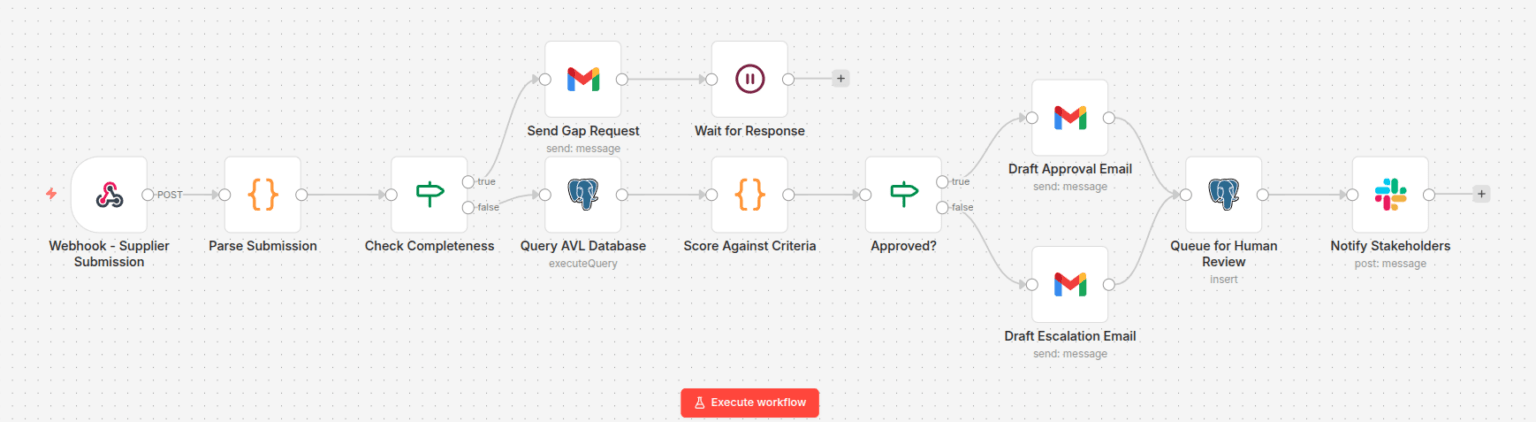
NAUTILUS: A New Approach to Maritime Regulatory Compliance Monitoring

Maritime regulatory compliance is a moving target. Between IMO circulars, EU delegated regulations, and Paris MoU inspection regimes, staying current requires constant vigilance. Most operators discover compliance gaps during audits or, worse, after violations. NAUTILUS takes a different approach: continuous automated monitoring with real-time alerting.
What NAUTILUS Does
The system continuously tracks regulatory sources that affect maritime operations:
  • IMO MEPC/MSC — Environmental and safety circulars, resolution amendments
  • EU Official Journal — Delegated acts, implementing regulations (ETS, FuelEU, MRV)
  • Paris MoU — Port State Control updates, inspection focus areas
When a new document appears, NAUTILUS parses it, extracts structured data, and compares it against your current compliance posture. If thresholds change, effective dates shift, or new requirements emerge, you know immediately — not during the next quarterly review.
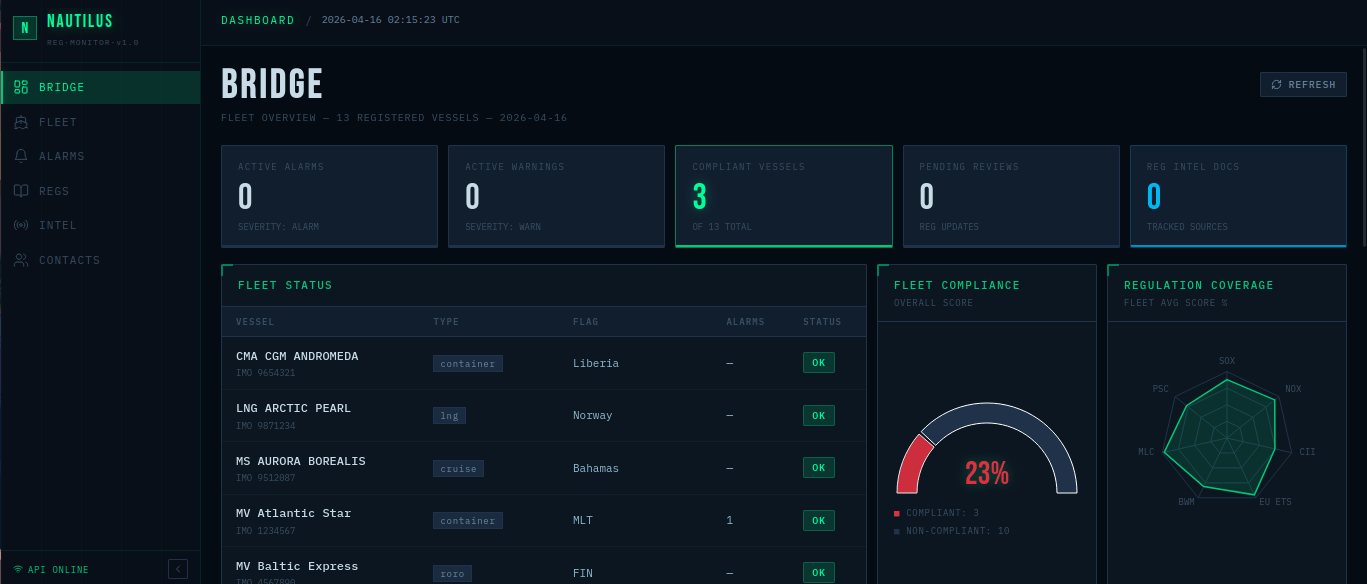
NAUTILUS Dashboard

Continue reading"NAUTILUS: A New Approach to Maritime Regulatory Compliance Monitoring"

Autonomous Agents in the Maritime and Offshore Industries

There is a particular kind of professional frustration that anyone who has worked on an offshore fabrication project will recognize. You are a qualified engineer — welding inspector, procurement lead, project quality manager — and you are spending the better part of your afternoon reformatting a certificate that arrived as a scanned PDF into a register that should have been updated yesterday, cross-referencing a heat number against a purchase order you have already checked twice, and drafting a non-conformance report for a deviation you identified six hours ago but haven’t had time to write up properly.

The inspection itself took twenty minutes. The paperwork will take two hours.

This is not an efficiency problem unique to a single project or company. It is structural. Maritime and offshore projects are, by design, documentation-intensive. Classification societies require it. Client quality systems require it. Regulatory frameworks require it. The documentation is not bureaucratic overhead that could be streamlined away — it is the evidence record that proves the physical asset was built correctly. You cannot eliminate it. But you can stop doing it manually.

 
Continue reading"Autonomous Agents in the Maritime and Offshore Industries"

FuelEU Maritime: Why The Penalty Mechanism Is More Complicated Than It Looks

Most early commentary on FuelEU Maritime focuses on the headline targets: a 2% reduction in greenhouse gas (GHG) intensity from 2025, stepping up every five years toward an 80% reduction by 2050. The conversation tends to centre on which fuels qualify and what well-to-wake compliance means for fuel procurement.

Less attention has been paid to the penalty and flexibility mechanism — the commercial engine underneath the regulation. The €2,400 per tonne VLSFO-equivalent penalty figure is easy to quote. Modelled against the real cost of compliance options and the pooling mechanism, it becomes something quite different: a price ceiling that defines a new internal market for carbon performance. How a shipping company decides between paying that penalty, generating surplus internally, or buying surplus from another operator is a question of commercial optimisation, not just regulatory awareness.

The penalty is a backstop, not a default

The penalty for exceeding a vessel’s applicable GHG intensity target is structured as €2,400 for every tonne of VLSFO-equivalent energy shortfall. In practice, this converts to approximately €58.54 per gigajoule of energy that would need to be displaced to bring the vessel into compliance. Translating that further into emissions-equivalent terms: the penalty works out to an effective cost of several hundred euros per tonne of CO₂ equivalent, depending on the specific fuel baseline — far above the prevailing EU Allowance price and well above the cost of most compliance pathways.

Continue reading"FuelEU Maritime: Why The Penalty Mechanism Is More Complicated Than It Looks"

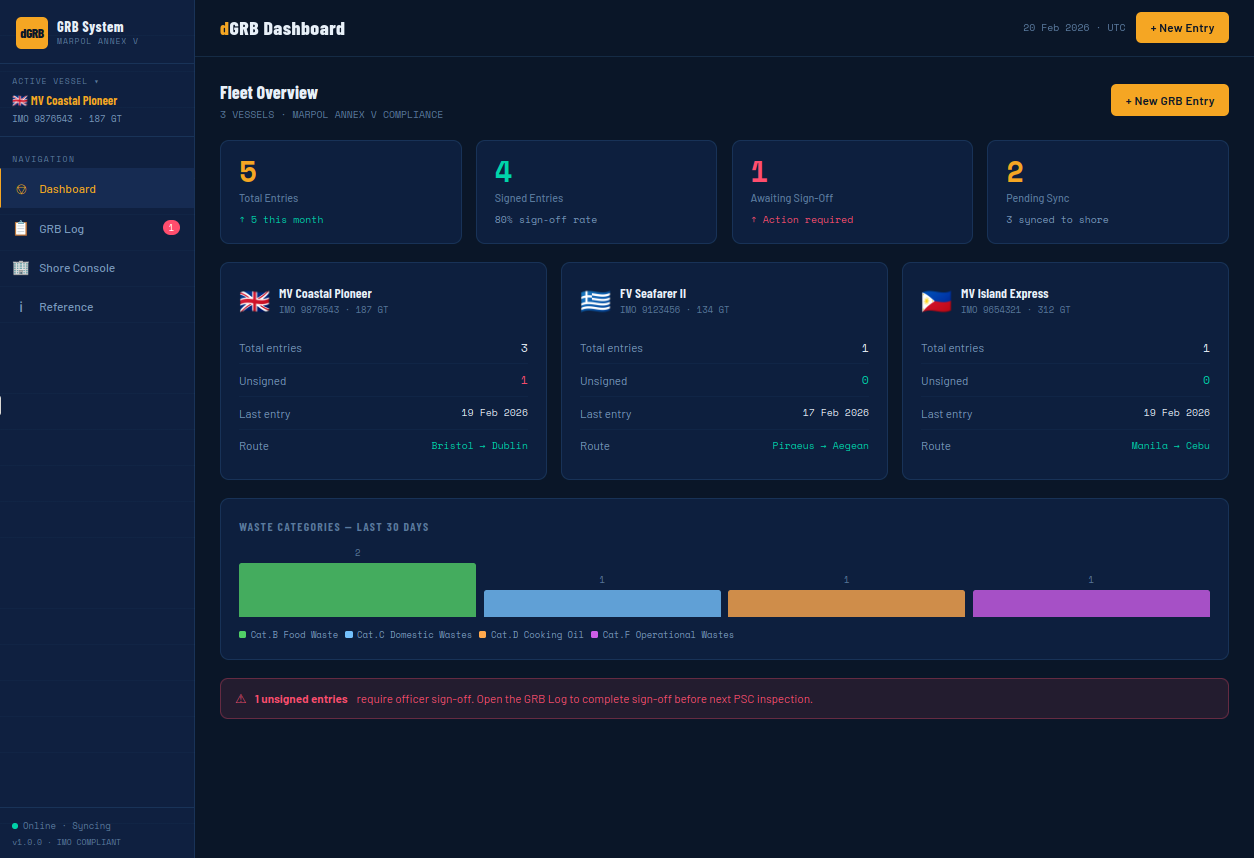
Digital Garbage Record Book (dGRB): MARPOL Annex V Compliance for Vessels Between 100 and 399 Gross Tonnes

The Recent MARPOL Annex V Amendments: A Regulatory Transformation for Small Vessels

Recent amendments adopted by the International Maritime Organization under MARPOL Annex V have reshaped the compliance landscape for commercial vessels of 100 gross tonnes and above. Adopted through IMO Resolution MEPC.360(79) and entering into force on 1 May 2024, these amendments lowered the Garbage Record Book threshold from 400 GT to 100 GT, bringing a significantly larger cohort of smaller vessels within structured regulatory oversight. The 100 to 399 GT segment represents the newly captured population — vessels that carried no such documentation obligation prior to the amendment.

This regulatory expansion has brought thousands of smaller commercial vessels into scope: fishing vessels operating under coastal fishing licences, coastal freighters serving regional trade routes, offshore support craft engaged in wind farm installation and maintenance, workboats and tugs providing port and terminal services, and small commercial operators transporting cargo across short-sea shipping routes. These vessels share a common characteristic — they were designed and crewed for operational efficiency rather than regulatory compliance infrastructure.

The consequences of inadequate MARPOL Annex V documentation have become increasingly tangible. Paris MOU, Tokyo MOU, and United States Coast Guard Port State Control data regularly identify garbage documentation deficiencies among frequently cited violation categories. The outcomes extend beyond administrative inconvenience: vessels face inspection delays, detention notices, financial penalties, and reputational damage that affects charter eligibility and insurance premiums.

The Digital Garbage Record Book has been developed specifically to address this compliance gap. It provides structured MARPOL Annex V documentation for vessels in the 100 to 399 GT segment without imposing administrative burdens incompatible with lean crewing arrangements and intermittent connectivity patterns.


dGRB Dashboard

Continue reading"Digital Garbage Record Book (dGRB): MARPOL Annex V Compliance for Vessels Between 100 and 399 Gross Tonnes"

Maritime Compliance Dashboard: A Comprehensive Solution for Shipping Emissions Management

International shipping has entered a structurally different regulatory era. What was once a gradual efficiency-driven policy landscape has evolved into a multi-layered carbon compliance regime with direct financial consequences, operational constraints, and long-term asset valuation implications.

In July 2023, the International Maritime Organization adopted its revised greenhouse gas strategy, formally committing international shipping to reach net-zero emissions by or around 2050, with interim checkpoints for 2030 and 2040. While the IMO framework establishes the global decarbonization trajectory, regional regulators have moved faster and further in introducing binding market-based measures.

The inclusion of maritime transport in the EU Emissions Trading System marks the first time international shipping faces direct carbon pricing at scale. From 2024 onward, ship operators calling at EU ports must surrender emission allowances based on verified CO₂ output, with coverage expanding from 40% in 2024 to full exposure by 2026. This mechanism transforms emissions from a technical metric into a balance sheet liability, directly linking operational decisions to cash flow and risk management.

Simultaneously, the FuelEU Maritime Regulation introduces a parallel compliance obligation beginning in 2025, targeting the greenhouse gas intensity of energy used on board. Unlike EU ETS, which prices emissions, FuelEU regulates fuel quality performance on a lifecycle basis. This creates structural incentives for alternative fuels, onshore power supply, and wind-assisted propulsion, while embedding penalty mechanisms for underperformance. Operators must now manage not only how much carbon they emit, but the carbon intensity of the energy they procure.

Overlaying these EU instruments is the Carbon Intensity Indicator (CII) regime under the IMO framework, which rates vessels annually from A to E based on operational efficiency relative to reference lines. A persistent D or E rating triggers mandatory corrective action plans and may influence charter attractiveness, financing terms, and long-term asset value.

Taken together, these frameworks do not operate independently. They interact operationally, financially, and strategically. A fuel switch that improves FuelEU compliance may affect EU ETS exposure. Speed optimization decisions that improve CII ratings may alter voyage economics. Allowance procurement strategies must account for evolving fuel pathways and trading patterns. Compliance is no longer a siloed reporting task—it is an integrated optimization problem spanning operations, finance, procurement, and commercial strategy.

Against this backdrop, shipping companies require systems that move beyond static reporting tools. They need platforms capable of continuously translating operational data into regulatory outcomes, financial exposure, and forward-looking risk indicators across multiple frameworks simultaneously.

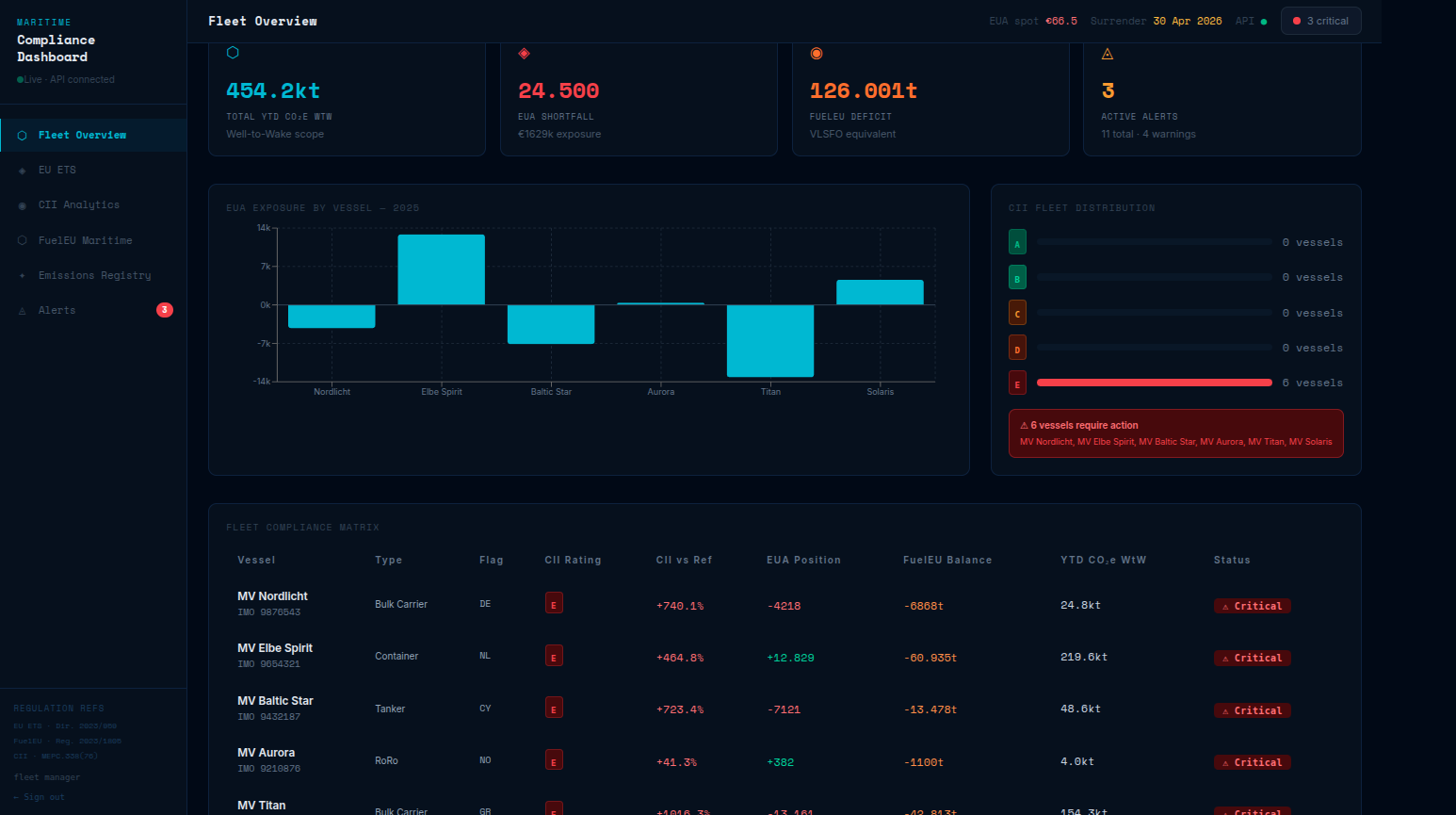
The Maritime Compliance Dashboard has been developed precisely for this new regulatory reality. It consolidates EU ETS, FuelEU Maritime, and CII obligations into a single analytical environment, enabling operators to quantify exposure, anticipate compliance gaps, and align operational decisions with regulatory and financial objectives in real time.

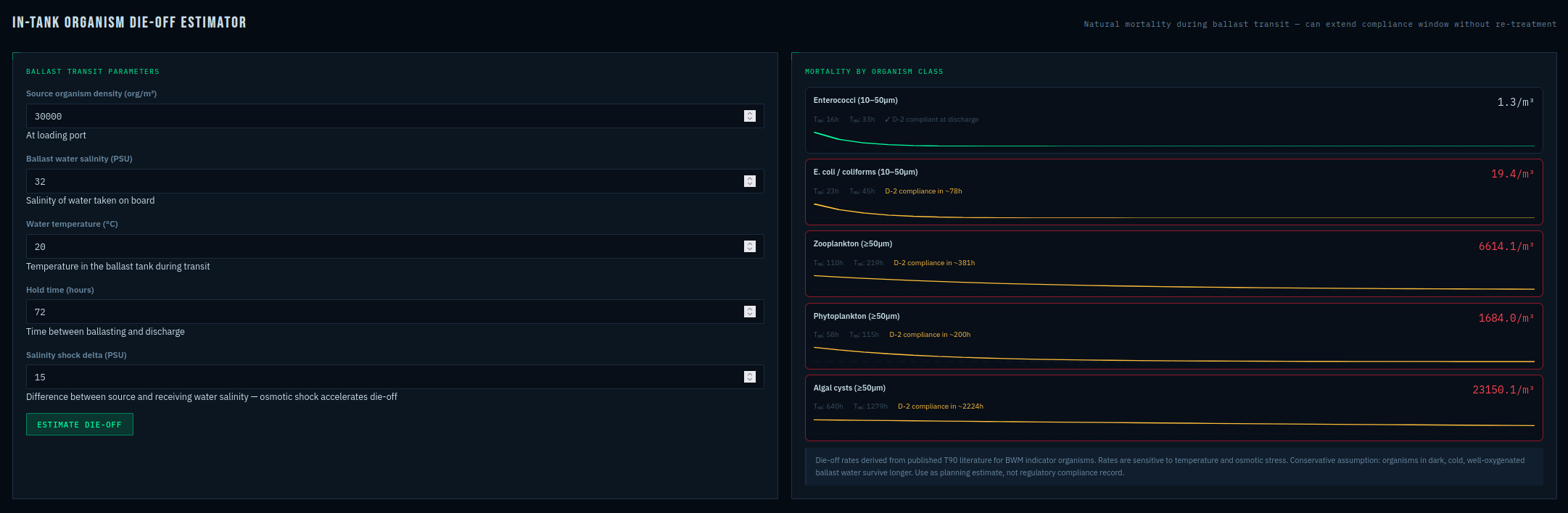
Maritime Compliance Dashboard
Continue reading"Maritime Compliance Dashboard: A Comprehensive Solution for Shipping Emissions Management"

The Hidden ETS Exposure In Non-EU Fleets

A shipping company operating five bulk carriers that spent all of 2024 trading between West Africa and South America has zero verified EU ETS liability for that year. No emissions to report. No allowances to surrender. The fleet is, by every practical measure, outside the scope of the regulation.

That picture changes the moment one of those vessels sails for an EEA port.

The exposure is not retrospective. It does not arise from what the fleet did last year. It is a forward looking, readiness-based exposure: a set of obligations that crystallise on the day a previously out-of-scope vessel makes its first EEA port call. For operators who pivot to European routes mid-calendar year, the gap between having no EU ETS infrastructure and needing full compliance can be surprisingly narrow — and expensive to bridge under pressure.

The trigger: first EEA port call

EU ETS obligations attach to a shipping company from the moment a vessel within its responsibility arrives at a port under the jurisdiction of an EEA member state. Covering 100% of emissions from intra-EEA voyages and 50% from voyages that begin or end outside the EEA, the regulation leaves little room for a gradual ramp.

For a fleet with no prior connection to the EEA, the immediate requirements triggered by that first call include:

– Holding an approved monitoring plan (MP) specific to the vessel;
– Having a Maritime Operator Holding Account (MOHA) opened in the relevant administering authority;
– Collecting and reporting verified emissions data from the very first EEA-touching voyage.

The commercial decision to fix a cargo to an EU destination is, in effect, a decision to become a regulated entity. The regulatory readiness cannot follow the fixture at a leisurely pace.

Continue reading"The Hidden ETS Exposure In Non-EU Fleets"

Virtual Appliance for Engineering Simulations

The main software package in our FEA workflow is CalculiX, an open source finite element analysis application with an implicit and explicit solver, developed by Dr. Guido Dhondt of MTU Aero Engines GmbH, with support from other figures in the academic world, such as Prof. Martin Kraska, Brandenburg University of Applied Sciences.
 
We are making available a pre-built Oracle VM VirtualBox appliance, ready to run and packed full with open source applications for engineering applications. This virtual appliance has been configured to meet the diverse needs of mechanical engineering professionals, providing a suite of tools that enhance productivity, streamline workflows, and deliver reliable results. The suite includes advanced analytics and postprocessing capabilities, allowing engineers to perform complex calculations and simulations with ease. This not only saves time but also ensures accuracy, reducing the risk of errors and rework. 
The installed applications include, among others, CalculiX v2.20 (for FEA applications), OpenFOAM v9 (for CFD applications), ParaView v5.7.0, and FreeCAD v1.0, running on Ubuntu 20.04 LTS. Besides, a web-based interactive computing platform, Jupyter Notebook, is installed and configured for creating and sharing computational documents, allowing users to configure and deploy workflows in data science, scientific computing, and machine learning.
Continue reading"Virtual Appliance for Engineering Simulations"

On Data Analysis

We are facing a new industrial revolution, where machines and sensors can connect to your IT infrastructure to provide more profound insight into your business and Key Performance Indicators (KPIs).

With the advent of this new paradigm, systems and monitoring applications are producing enormous amounts of actionable data allowing for cost optimization, prediction of future events, behavior classification, quality control, and a number of other functionalities.


The connection of sensors from remote locations to your local or remote IT infrastructure can be undertaken in a seamless manner through a low cost, energy efficient, and secure Internet of Things (IoT) network. Business intelligence overviews can be generated, alerts programmed and additional functionality plugged in and actioned based upon the received and analyzed data. Moreover, Machine learning (ML) models can be generated allowing for prediction on most valuable operational parameters. Find out how we can help by downloading our data analysis brochure.

Flange Bolt Torque Application

Flange Bolt Torque Pro is a browser-based engineering tool that calculates bolt torque, verifies joint integrity, and manages assembly records for flanged pipe connections.

Built across four major versions through a rigorous audit cycle, it implements the full ASME PCC-1-2019 torque formula, a class-dependent ASME B16.5 bolt database covering NPS ½”–24″ across all six pressure classes, and the complete ASME VIII Division 1 Appendix 2 dual-load gasket model — computing both the seating load (W_seat = πGby) and the operating load under pressure (W_op = π/4·G²·P + 2b·π·G·m·P) and identifying which governs.

Bolt Torque Calculator

Continue reading"Flange Bolt Torque Application"

Digital Twin

We have developed a digital twin model capable of pairing virtual and real equipment, including sensor readings.

The most significant features are as follows:

  • Fully integrated on a virtual reality (VR) environment.
  • Integration of as-built 3D models of equipment from different CAD packages, together with point cloud scan data on a seamless environment.
  • Integration of real time data from live SCADA systems or data sets enabling the presentation of real-time status and operating condition, including alarms.
  • Integration and visualization of SQL databases of equipment, including equipment and part datasheets, maintenance logs, etc.
  • Capable of connecting remotely with users, allowing for remote design reviews and/or remote collaboration thorough the life cycle of the equipment or installation.


Find out more through the following link, or downloading our informative brochure.