Engineering and Project Management
 

On Data Analysis

We are facing a new industrial revolution, where machines and sensors can connect to your IT infrastructure to provide more profound insight into your business and Key Performance Indicators (KPIs).

With the advent of this new paradigm, systems and monitoring applications are producing enormous amounts of actionable data allowing for cost optimization, prediction of future events, behavior classification, quality control, and a number of other functionalities.
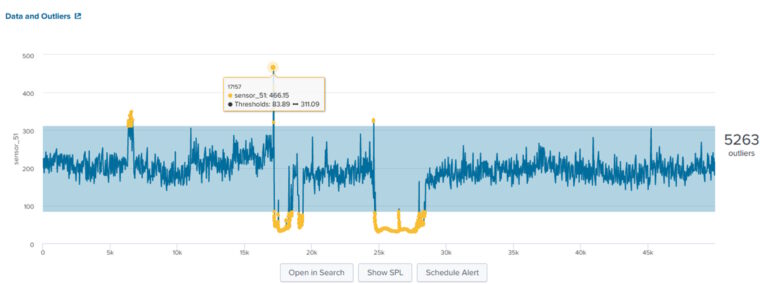
 

The connection of sensors from remote locations to your local or remote IT infrastructure can be undertaken in a seamless manner through a low cost, energy efficient, and secure Internet of Things (IoT) network. Business intelligence overviews can be generated, alerts programmed and additional functionality plugged in and actioned based upon the received and analyzed data. Moreover, Machine learning (ML) models can be generated allowing for prediction on most valuable operational parameters. Find out how we can help by downloading our data analysis brochure.
Finite Element Analysis Benchmarking

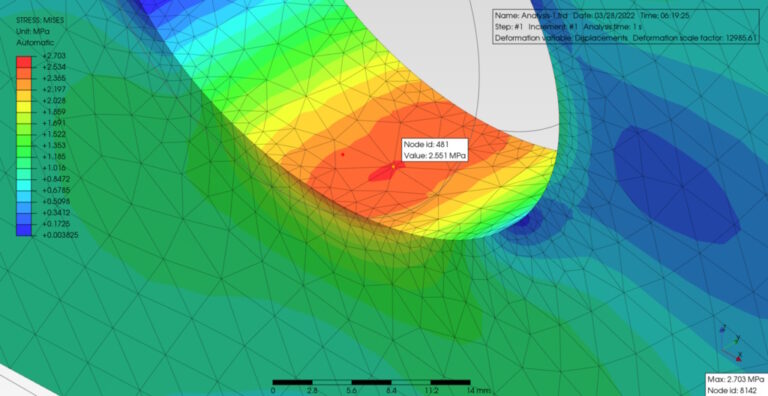
We are in the process of integrating a new FEA software package into our workflow, and we are currently running a batch of example tests, some of them based upon classic textbook problems, some of them based upon benchmarking guidelines from recognized analysis packages (ie, Abaqus, etc).

The basic idea behind this approach is if a classical solution can be emulated using FEA then it can constitute a good verification of the accuracy of the FEA software package, as well as our analysis skills.

This approach is not without fault, however, as most classical textbook cases are simplified problems configured in a specific manner which facilitates manual calculation and solving, and which in some cases can be counterintuitive to model in a FEA simulation, specially in what pertains to boundary conditions.


Join us in this process, feel free to download our current brochure and request copies of the benchmarking tests, or the open source FEA package we are currently integrating, and feel free to participate by suggesting new benchmarks or case studies. Besides these files we can also grant access to our remote simulation and analysis environment, as well as our remote postprocessing tool, based upon Paraview Glance.

Bulk Loading Filters

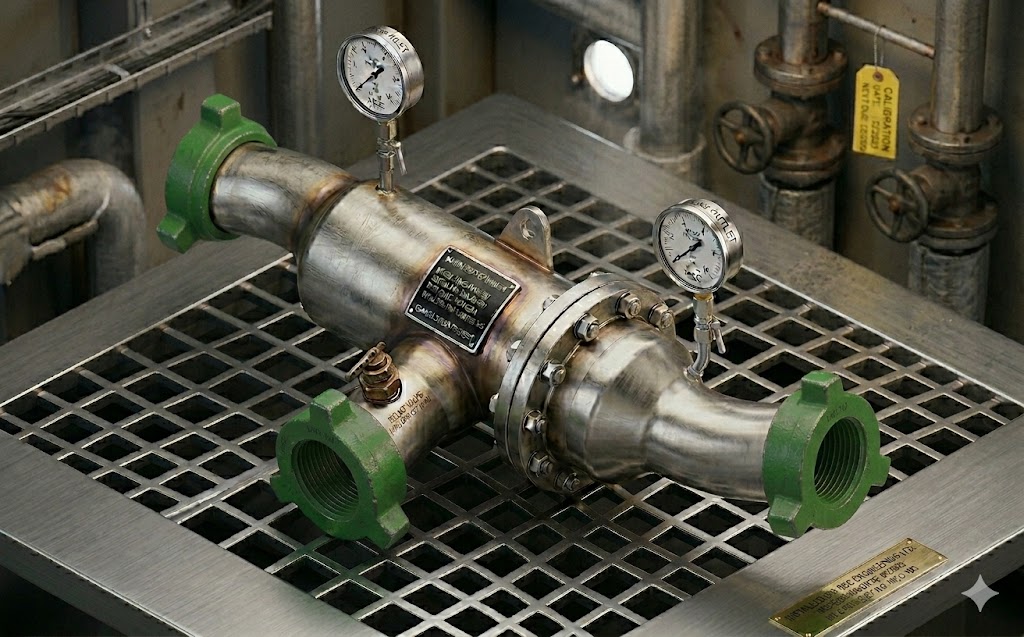
Bulk loading filters, also called rock catchers or de-rockers, are used to keep oversized lumps of material from entering the bulk loading system onboard ships or drilling rigs, potentially resulting in damage to equipment or piping.

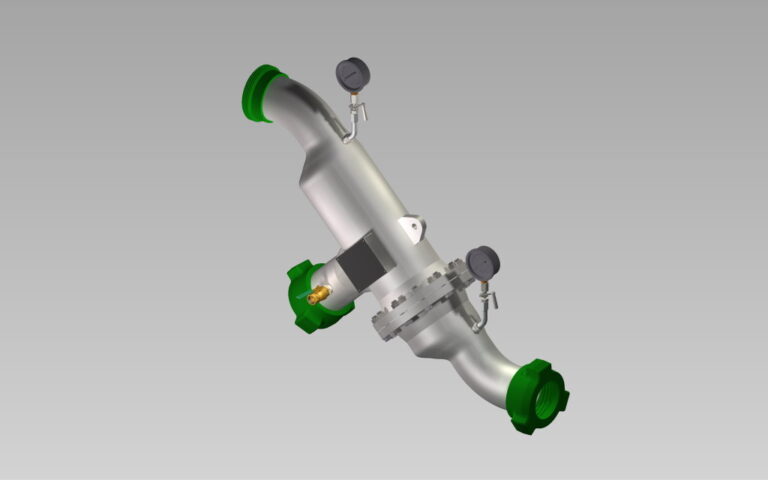
The bulk loading filter is fitted with a heavy duty mesh (mesh hole size of 10 mm), located inside the package, which crushes oversized material or traps it into a small collection area for removal.

The package is fitted with Weco Wing quick connection couplings (fig. 200 or equivalent, other options can be identically accommodated) as well as pressure indicators located upstream and downstream from the mesh, allowing for easy visual identification of the operational condition of the filter.

The package is also fitted with a pneumatic air connection (ball valve and check valve) which can be used to clean the interior.

The bulk loading filter package has been designed accounting for design pressures of up to 16 bar, and minimum design temperatures of -20ºC. Its introduction into the bulk loading system will impose a minimal head loss which can increase as the filter gets clogged, hence the importance of keeping regular readings of the local pressure indicators to ensure the package is operating in optimum working conditions. The size of the collecting mesh can be adjusted to other mesh hole sizes as preferred by the customer.

Besides bulk loading filters, we can design and supply other types of equipment such as bulk tanks or cyclone dust collectors. 

(Note: Images above are renderized, stylized images for presentation based upon 3D models)

Supply of Steam Heater Skid

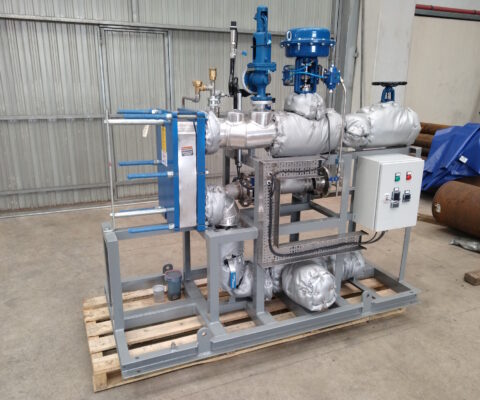
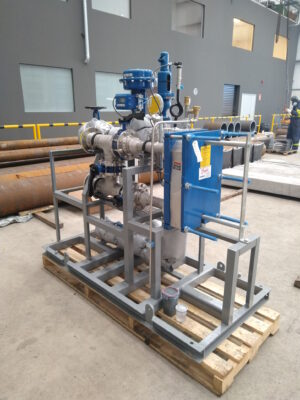
From a project delivered earlier this year including the design and production of a low pressure steam skid compliant with Class requirements, to be installed onboard a series of gas tankers as part of a ballast water management system. The skid uses low pressure steam on the hot side of the heat exchanger to increase temperature of fluid on the cold side. Steam pressure and flow can be adjusted by the flow control valve, through the combined action of cascaded controllers based upon the readings of transmitters located on both circuits.

Steam Heater Skid


The skid uses low pressure steam on the hot side of the heat exchanger to increase temperature of fluid on the cold side. Steam pressure and flow can be adjusted by the flow control valve, through the combined action of cascaded controllers based upon the readings of transmitters located on both circuits.

Digital Twin

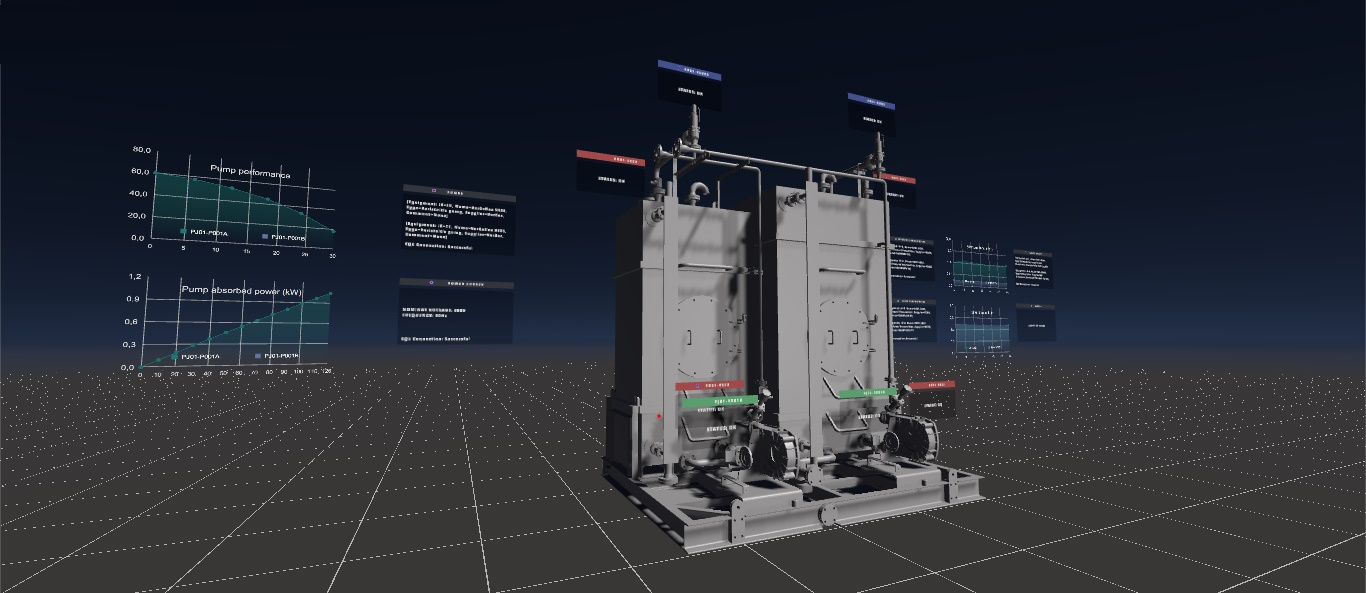
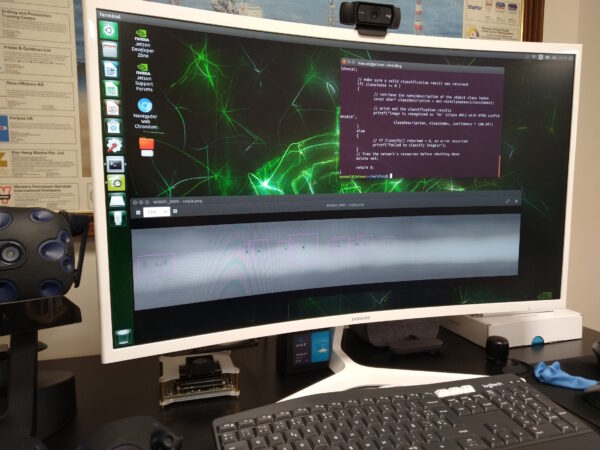
We have developed a digital twin model capable of pairing virtual and real equipment, including sensor readings.

The most significant features are as follows:

  • Fully integrated on a virtual reality (VR) environment.
  • Integration of as-built 3D models of equipment from different CAD packages, together with point cloud scan data on a seamless environment.
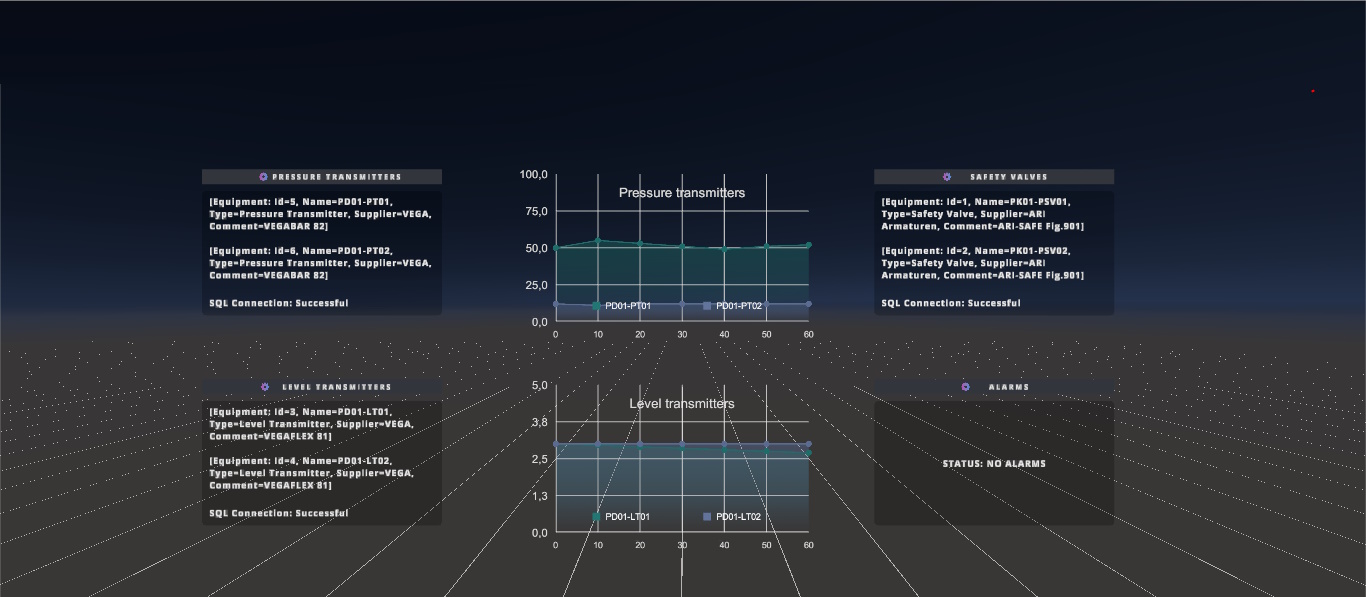
  • Integration of real time data from live SCADA systems or data sets enabling the presentation of real-time status and operating condition, including alarms.
  • Integration and visualization of SQL databases of equipment, including equipment and part datasheets, maintenance logs, etc.
  • Capable of connecting remotely with users, allowing for remote design reviews and/or remote collaboration thorough the life cycle of the equipment or installation.


Find out more through the following link, or downloading our informative brochure.

Automatic Defect Detection System

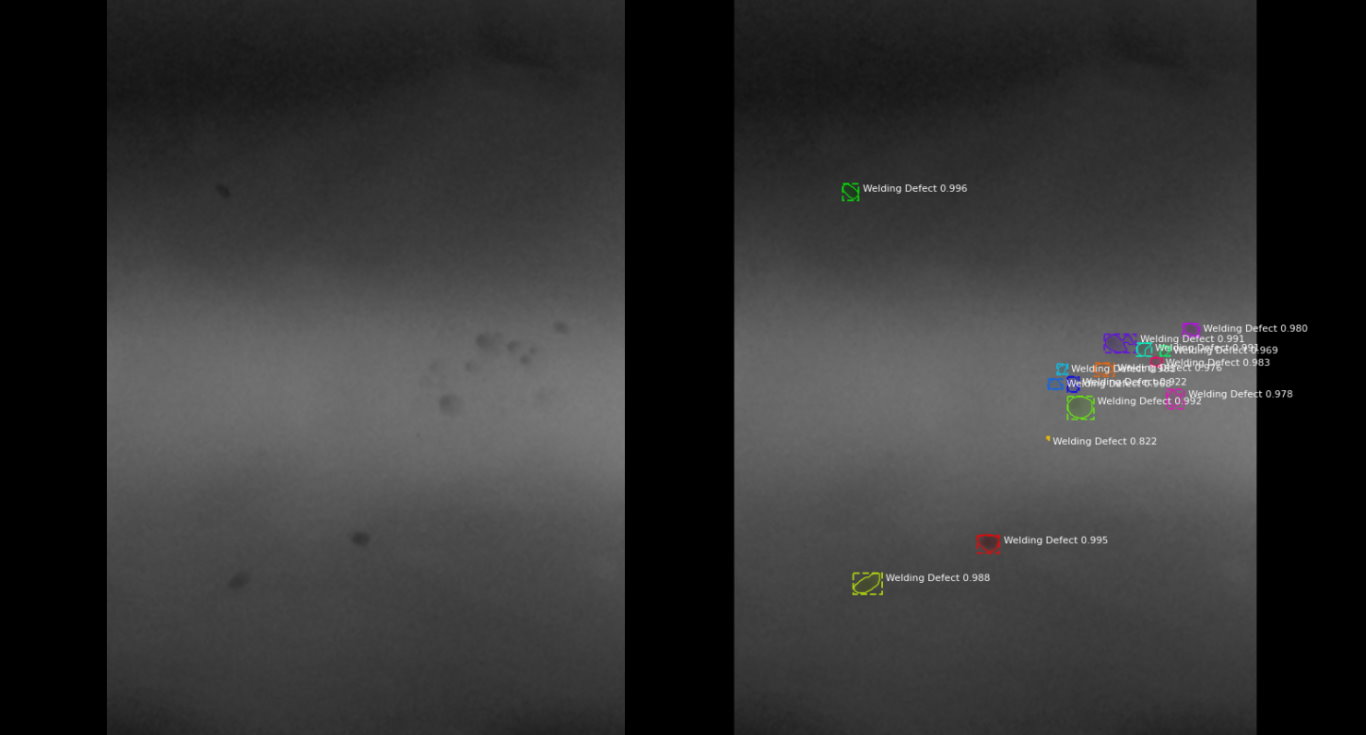
Undergoing development of an automatic defect detection system in manufactured parts, using convolutional neural networks to detect features in an image while simultaneously generating a high-quality segmentation mask for each instance.

Common defects include cavities, pores, lack of penetration, and other type of volumetric defects frequently found in castings and welded parts.

Detection of these defects can allow faulty products to be identified early in the manufacturing process, resulting in improvements in quality, as well as time and cost savings.

The defect detection system is trained and tested on publicly available X-ray dataset and is currently at an early development stage.

Welding Defects

The classification method being used is binary (defect or no-defect) so the results being obtained are only useful for a first pass assessment of the quality of the weld. It would be possible, on a further iteration, to use a multi-class defect classification allowing much greater granularity and variety in the results (gas cavity, lack of penetration, porosity, slag inclusion, undercut, lack of fusion, etc).

Visit to Glasgow

We are priviledged to be visiting Glasgow this week following up on a project to retrofit an exhaust gas cleaning system onboard a SuezMax class oil tanker.

Glenlee tall ship (Galatea)
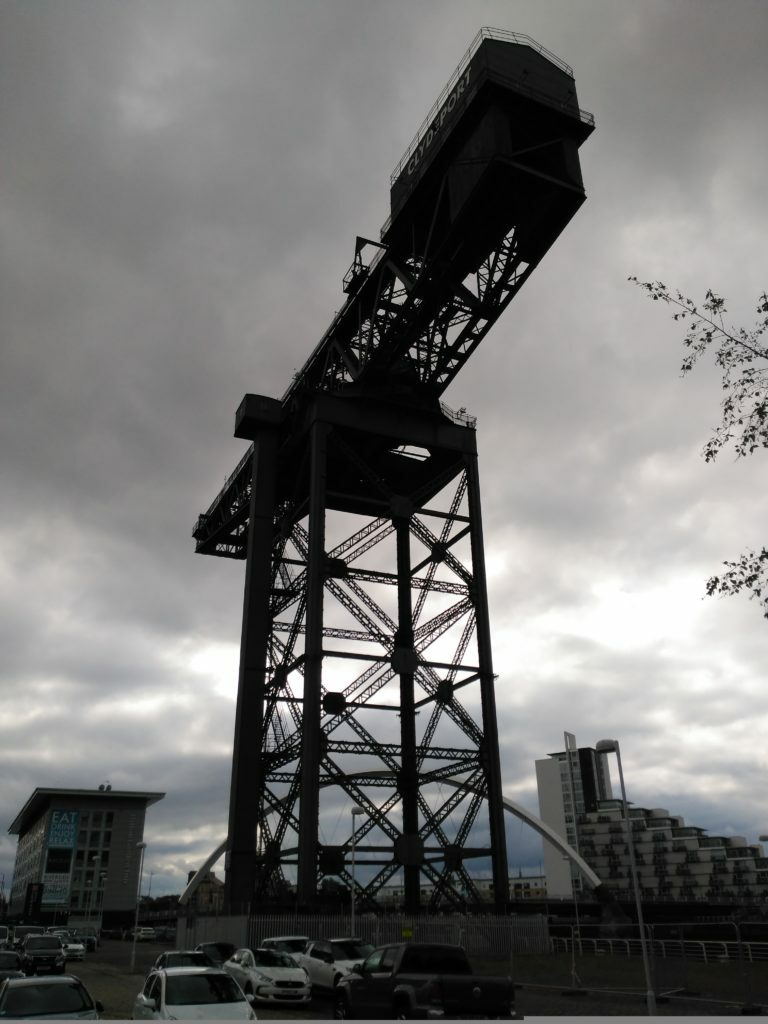
Finnieston Crane
Finnieston Crane

We thank our client and friends for their continuous consideration and support during our stay.