A shipping company operating five bulk carriers that spent all of 2024 trading between West Africa and South America has zero verified EU ETS liability for that year. No emissions to report. No allowances to surrender. The fleet is, by every practical measure, outside the scope of the regulation.
That picture changes the moment one of those vessels sails for an EEA port.
The exposure is not retrospective. It does not arise from what the fleet did last year. It is a forward looking, readiness-based exposure: a set of obligations that crystallise on the day a previously out-of-scope vessel makes its first EEA port call. For operators who pivot to European routes mid-calendar year, the gap between having no EU ETS infrastructure and needing full compliance can be surprisingly narrow — and expensive to bridge under pressure.
The trigger: first EEA port call
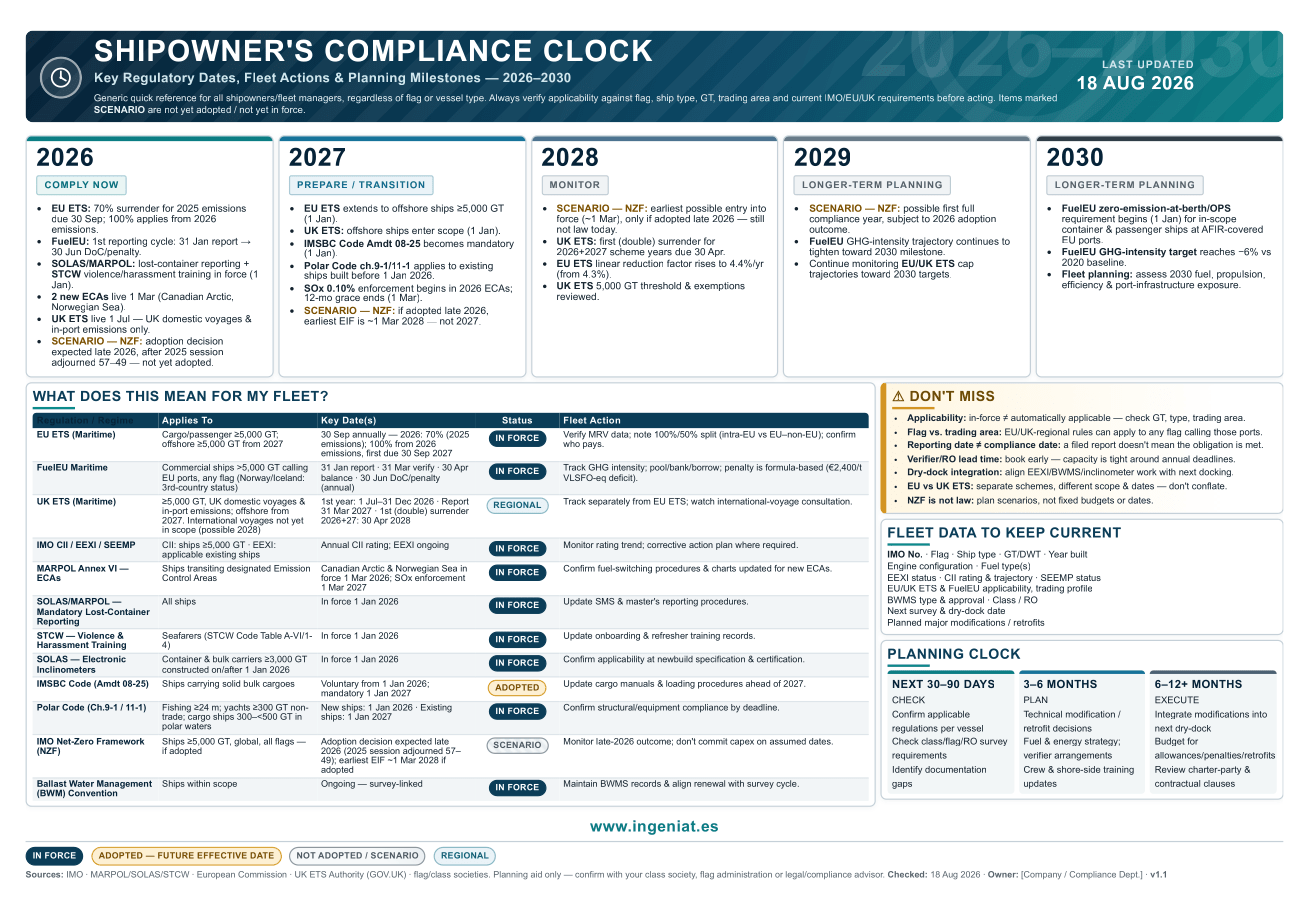
EU ETS obligations attach to a shipping company from the moment a vessel within its responsibility arrives at a port under the jurisdiction of an EEA member state. Covering 100% of emissions from intra-EEA voyages and 50% from voyages that begin or end outside the EEA, the regulation leaves little room for a gradual ramp.
For a fleet with no prior connection to the EEA, the immediate requirements triggered by that first call include:
– Holding an approved monitoring plan (MP) specific to the vessel;
– Having a Maritime Operator Holding Account (MOHA) opened in the relevant administering authority;
– Collecting and reporting verified emissions data from the very first EEA-touching voyage.
The commercial decision to fix a cargo to an EU destination is, in effect, a decision to become a regulated entity. The regulatory readiness cannot follow the fixture at a leisurely pace.