
For bulk carriers, tankers, and vessels with tanks that can’t be pumped completely dry, ballast water compliance isn’t just about treatment efficacy. It’s about what happens when treated ballast mixes with residual water and sediment that was never treated.
The Problem with Unpumpable Residuals
No cargo tank can be pumped completely dry. There’s always some residual volume at the bottom—whether it’s:
- Residual cargo tank water
- Sediment accumulation
- Tank washings
- Bilge water
This residual still contains organisms at source concentration (the same as the untreated water when it entered). When you add treated ballast on top, mixing occurs.
The Compliance Question
When you discharge ballast, does the mixture of treated water and untreated residual stay within D-2 limits?
The answer depends on:
- Volume of residual
- Concentration of organisms in residual
- Volume of treated ballast
- Treatment efficacy of your BWMS
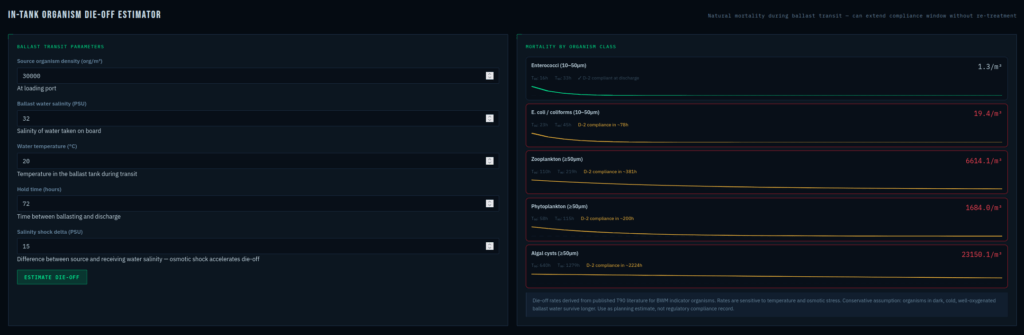
The Tank Residual & Sediment Compliance Check
This new tool in the BWM Suite calculates:
- Whether your mix stays within D-2 limits at discharge
- The maximum allowable residual volume for your tank geometry
- How different residual volumes affect compliance
Practical Applications
For Shipowners
- Verify compliance for specific tanks and routes
- Plan ballasting operations to minimise compliance risk
- Document residual management procedures
For Port State Control
- Technical justification for discharge compliance
- Evidence of proactive compliance management
- Documentation for vessels with challenging tank configurations
Important Limitations
This tool addresses the mixing question—it doesn’t substitute for proper treatment. The residual must still be managed according to IMO guidelines and local regulations.
Use the Tank Residual & Sediment Compliance Check at https://bwms.ingeniat.eu
Demo account (frontend login):
[email protected]/admin123— admin role