The Food Waste Maceration and Thermal Stabilization System (FWMTS) is an integrated onboard organic waste processing solution engineered to convert galley-generated food waste into a hygienically treated and biologically stabilized effluent suitable for compliant handling under applicable maritime environmental regulations, including IMO MARPOL Annex IV and Annex V.
The system is designed to address the operational, environmental, and regulatory challenges associated with modern vessel waste management by reducing pathogen load, minimizing odor and vector attraction, decreasing waste volume, and improving effluent stability prior to discharge or shore reception transfer.
Unlike conventional food waste management approaches—such as direct discharge (where permitted), comminution only, dehydration, or incineration—the FWMTS applies a controlled combination of mechanical, thermal, and biochemical treatment stages. This multi-barrier treatment strategy enhances environmental protection while optimizing onboard space utilization and operational efficiency.
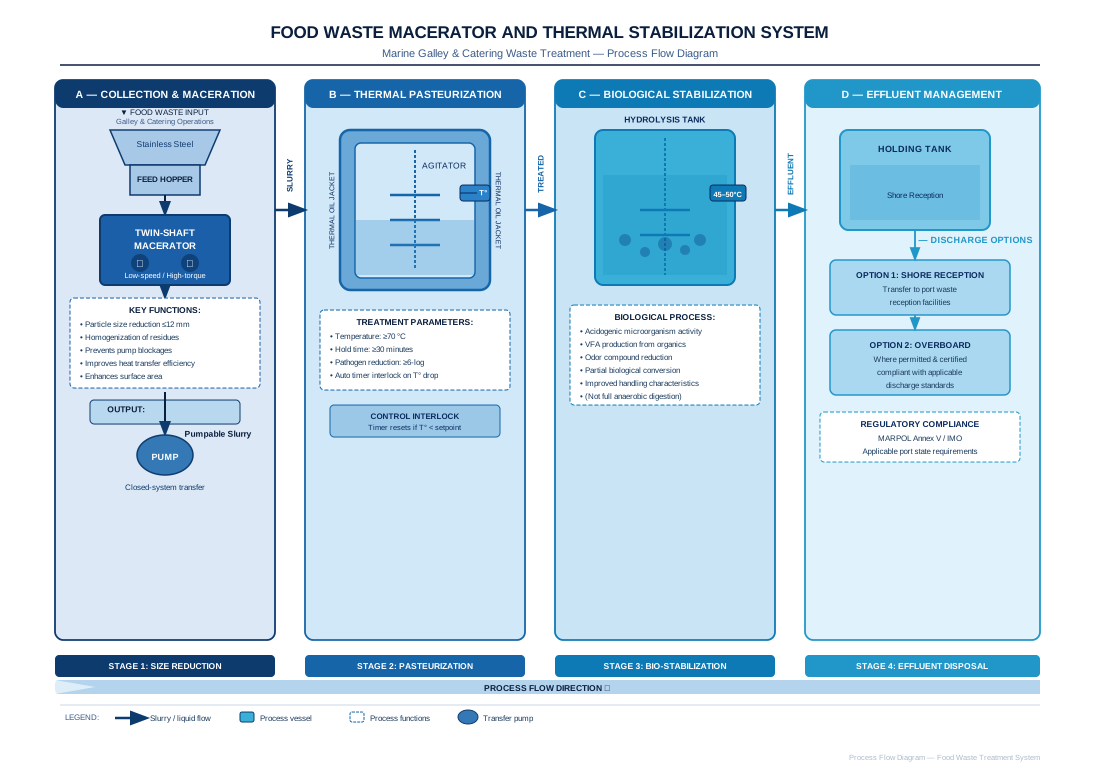
The FWMTS operates as a sequential batch treatment process comprising three primary stages:
a) Waste Collection and Mechanical Size Reduction
Food waste from galley and catering operations is collected and introduced into a stainless-steel feed hopper. The material is then processed through a twin-shaft low-speed, high-torque macerator.
This stage performs the following critical functions:
- Reduces particle size to ≤12 mm to improve thermal penetration.
- Homogenizes heterogeneous food residues.
- Prevents downstream pump blockages.
- Improves heat transfer efficiency during pasteurization.
- Enhances surface area for subsequent biological stabilization.
The maceration stage transforms bulk solid food waste into a pumpable slurry, enabling closed-system handling and minimizing manual intervention.
b) Thermal Pasteurization (Pathogen Reduction Stage)
The macerated slurry is transferred to a jacketed pasteurization vessel equipped with controlled agitation and thermal oil heating.
The thermal treatment cycle is designed to:
- Raise slurry temperature to ≥70 °C.
- Maintain minimum hold time of 30 minutes.
- Ensure temperature uniformity throughout the vessel.
- Achieve high-level vegetative pathogen inactivation (≥6-log reduction).
Continuous temperature monitoring and automatic timer interlocks ensure regulatory-compliant thermal lethality.
If the temperature drops below the setpoint, the holding timer automatically resets to guarantee treatment integrity.
This stage reduces biological risk and enhances downstream stability while maintaining a controlled and energy-optimized heating profile compatible with marine power systems.
c) Acid-Phase Biological Stabilization
Following pasteurization, the treated slurry is transferred to a dedicated hydrolysis tank maintained at 45–50 °C under controlled mixing conditions.
During this stage:
- Naturally occurring acidogenic microorganisms convert complex organics into simpler soluble compounds.
- Volatile fatty acids (VFAs) are formed.
- Odor-causing compounds are reduced.
- The waste stream becomes more chemically and biologically stable.
This phase does not constitute full anaerobic digestion but provides partial biological conversion sufficient to reduce instability and improve handling characteristics.
d) Effluent Management and Regulatory Handling
Upon completion of stabilization:
- The treated effluent may be transferred to a holding tank for shore reception disposal, or
- Discharged overboard where permitted and certified compliant with applicable discharge standards.
Operational and Environmental Advantages:
The FWMTS provides a structured approach to onboard organic waste management with measurable operational benefits:
Enhanced Hygiene and Risk Reduction
- Multi-barrier pathogen reduction.
- Reduced vector attraction.
- Lower odor emissions compared to untreated waste storage.
Volume and Mass Optimization
- Partial reduction in volatile content.
- Improved dewatering potential.
- Reduced handling burden for crew.
Energy-Efficient Thermal Integration
- Controlled batch heating.
- Insulated vessels minimize heat loss.
- Compatibility with thermal oil systems or waste heat recovery (optional configuration).
Automated Control and Monitoring
- PLC-based batch sequencing.
- Temperature and pH logging.
- Safety interlocks and alarm management.
- Minimal crew intervention during normal operation.
Compact Marine Footprint
- Skid-mounted modular assembly.
- Designed for installation in machinery spaces or waste management rooms.
- Marine-rated electrical and structural design.
Regulatory Alignment and Compliance Considerations
The system is engineered with consideration for:
- MARPOL Annex IV (Sewage discharge requirements)
- MARPOL Annex V (Garbage management)
- Classification Society machinery and pressure vessel rules
- SOLAS fire safety provisions
- IEC 60092 marine electrical standards
It is important to note that pasteurization and stabilization alone do not automatically confer discharge approval; effluent quality must meet defined regulatory limits and receive certification from the flag administration or recognized organization.
Design Philosophy:
The design philosophy of the FWMTS emphasizes:
-
- Process Integrity Redundant monitoring and interlocks ensure that every treatment batch achieves required thermal and stabilization parameters.
- Marine Robustness Structural design accounts for vessel motion, vibration, and marine environmental exposure.  
- Maintainability Accessible inspection points, removable components, and clean-in-place capability minimize downtime.
- Energy Rationalization Heating capacity is sized based on calculated thermal load with optimized ramp rates to avoid excessive generator demand.
Strategic Role in Sustainable Shipping:
As environmental compliance requirements become increasingly stringent and operators seek to reduce onboard waste storage volumes and environmental risk, integrated thermal-biological treatment systems such as the FWMTS represent a forward-looking approach to marine organic waste management.
We can provide the following engineering services associated with the design and installation of a thermal waste treatment device.
- Feasibility Study and Concept Design:
- Evaluation of space availability and weight considerations
- Preliminary process flow diagrams
- Conceptual layout designs
- Initial cost estimates and project timeline
- Detailed Engineering Design:
- Process engineering and equipment sizing
- Piping and Instrumentation Diagrams (P&IDs)
- 3D modeling of the equipment layout
- Electrical system design and integration
- Equipment Specification and Procurement Support:
- Development of technical specifications for major equipment
- Vendor evaluation and selection assistance
- Review of vendor documentation and drawings
- Structural Modifications Design:
- Reinforcement designs for existing structures if required
- Finite Element Analysis (FEA) for critical structural components
- Integration Engineering:
- Interface design with existing ship systems (e.g., power, water)
- Modification of existing piping systems
- Safety and Risk Engineering:
- Failure Mode and Effects Analysis (FMEA)
- Regulatory Compliance and Classification:
- Liaison with classification societies
- Preparation of documentation for class approval
- Development of procedures to meet regulatory requirements
- Installation Planning:
- Development of detailed installation procedures
- Creation of work packages for shipyard or offshore installation
- Lift plans for major equipment
- Installation sequence optimization
- Commissioning and Start-up Support:
- Development of commissioning procedures
- Supervision of installation and commissioning activities
- Performance of system tests and trials
- Troubleshooting and optimization support
- Documentation and Training:
- Preparation of operating and maintenance manuals
- Development of crew training programs
- Environmental Impact Assessment:
- Analysis of the thermal waste treatment system’s environmental benefits
- Support for environmental permit applications
- Project Management:
- Overall project scheduling and coordination
- Cost control and progress reporting
- Quality assurance and control
- Lifecycle Support:
- Development of maintenance and inspection schedules
- Optimization studies for long-term operation
- Technical support for system upgrades or modifications
- Feasibility Study and Concept Design:
By combining mechanical homogenization, validated thermal pathogen reduction, and controlled biological stabilization within a compact, automated system, the FWMTS supports sustainable vessel operation while maintaining full alignment with classification and regulatory expectations.