
Buyers who have not commissioned an offshore container engineering package before often ask what they are actually paying for. The deliverables look like a folder of drawings and calculations — which, at the simplest level, they are. But the value is not in the documents themselves. It is in what those documents represent: a coherent engineering basis that the certification body will accept, the manufacturer will build to, and the offshore team will use safely.
This article describes what a complete offshore container engineering package contains and how the work progresses from instruction to certificate.
What a Complete Offshore Container Engineering Package Contains
A complete package starts with a design brief that captures the project-specific inputs: payload and centre of gravity envelope, operational environment (metocean data, temperature range, hazardous area classification if applicable), the applicable certification standard, and the interface with the host vessel or installation. Errors or omissions at this stage propagate through every subsequent deliverable.
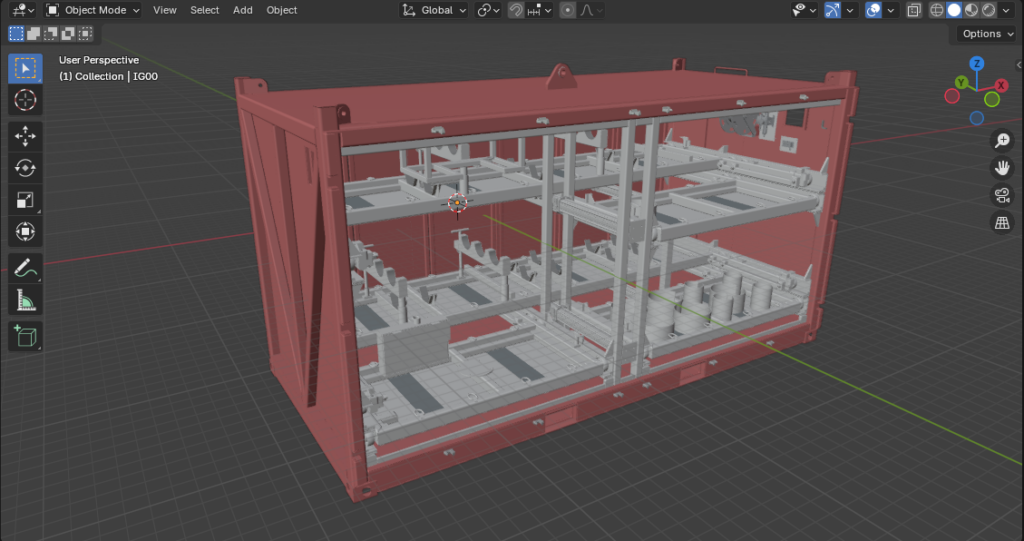
The structural calculation set is the technical core of the offshore container engineering package. It covers the primary frame analysis under all specified load cases, the lifting point and pad eye design including dynamic load factors, and the structural interface with the host vessel or deck. For hazardous area applications, it also covers the pressure boundary design and the analysis of penetrations.
The drawing package typically includes a general arrangement drawing, fabrication drawings for the primary structure, and detail drawings for complex nodes, connections, and the pressure boundary. Detail drawings must be sufficient for the manufacturer to produce the offshore container without requiring interpretation — vague detail drawings are a common source of fabrication errors and certification delays.
The material specification defines the material grades, toughness requirements, and any special requirements such as low-sulphur content for sour service or specific corrosion allowances. Material traceability back to the mill certificate is a DNV 2.7-1 certification requirement, so the specification must be precise enough to generate verifiable traceability at the fabrication stage.
The certification plan defines the certification scope, the hold points at which the certification body will witness or inspect work, the testing requirements (including load testing and any non-destructive examination), and the documentation that will be compiled for the final certification submission.
Stage 1: Design and Certification Body Engagement
Before detailed offshore container design begins, we agree the certification path with DNV or Lloyd’s Register — confirming which standards apply, which drawings and calculations will be submitted at each stage, and what the hold point schedule will look like. This early engagement prevents the most common cause of certification delay: discovering at the submission stage that the certification body requires something not included in the original scope.
Design review turnaround is managed as part of the engineering contract. We track review cycles, respond to technical queries from the certifier, and manage conditions and concessions on behalf of the client.
Stage 2: Fabrication Support
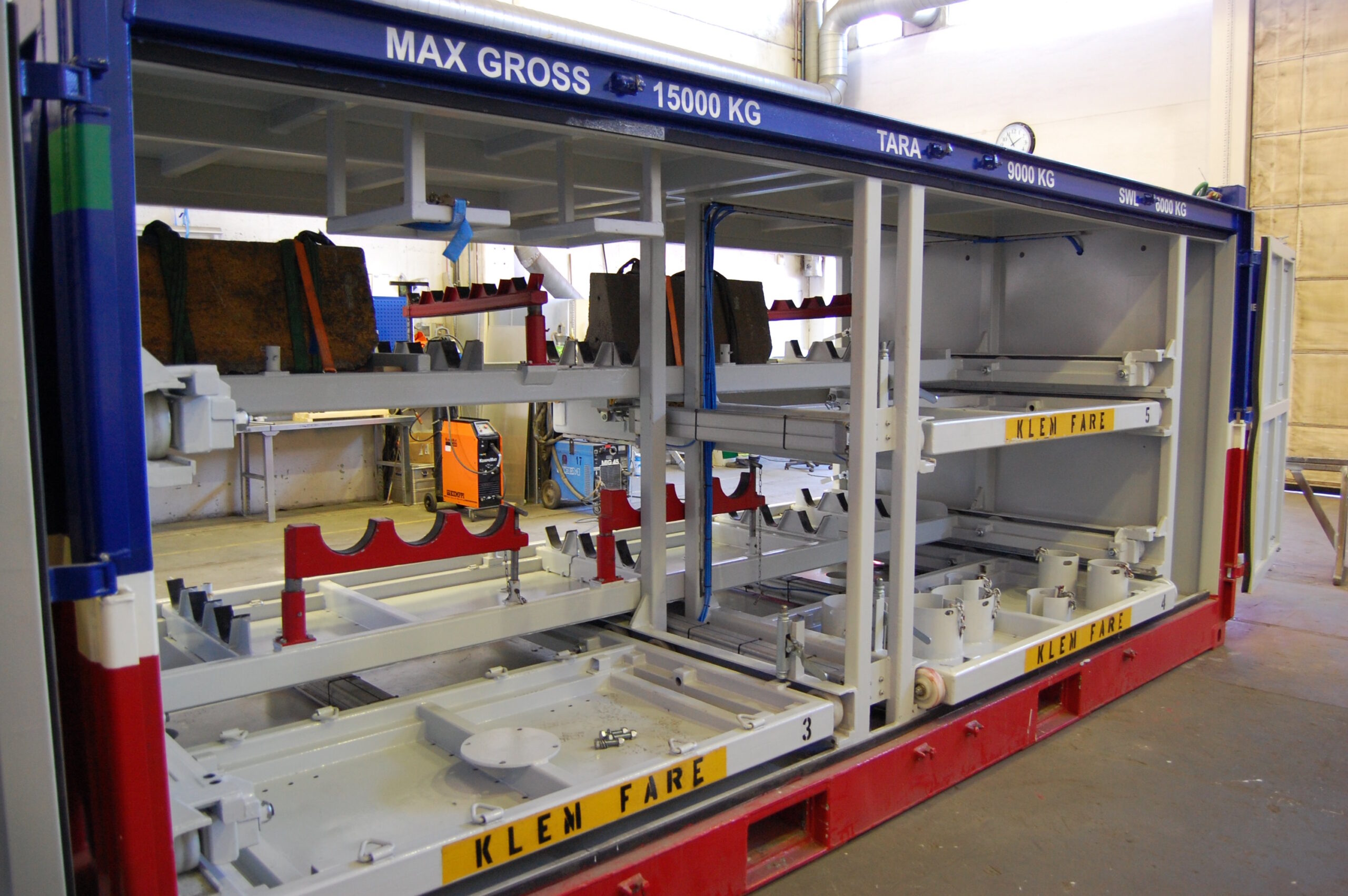
Offshore container engineering does not stop when the design is approved. During fabrication, we maintain an interface with the manufacturer through a defined schedule of hold point inspections — typically including weld completion on primary structural members, installation of lifting points, and completion of the pressure boundary for hazardous area containers.
RFIs from the manufacturer are managed through the engineering team. RFIs that involve a change from the approved design are evaluated and, if acceptable, a formal deviation or concession is raised and submitted to the certification body for approval. Undocumented changes are one of the primary causes of offshore container certification problems at close-out.
Stage 3: Certification and Close-Out
The final stage is compiling the as-built documentation package and obtaining the DNV 2.7-1 certificate of conformity. The as-built package includes the approved design drawings updated to reflect any fabrication changes, the final calculation set, material mill certificates and traceability records, weld procedure qualification records, and non-destructive examination results.
The client receives the certificate, the as-built drawings, the test records, and an operations and maintenance data package appropriate for the offshore container type and intended service.
Typical Timeline from Instruction to Certificate
For a bespoke offshore container, the design and certification approval stage typically takes 4–8 weeks depending on complexity and the certification body’s workload. Fabrication and surveying depend on the manufacturer’s schedule. In total, a typical bespoke unit takes 14–22 weeks from instruction to certificate.
Schedule compression is possible — for example, by running detailed design and certification body pre-review in parallel, or by engaging the certification body on a fast-track basis for critical path items. These options should be discussed early in the project.
Contact us with your offshore container project details and we will provide a fully detailed engineering proposal within 3 business days
Share your project requirements below. We’ll review your specifications and respond with a detailed engineering proposal.