You have a certified offshore container. You need to modify it. Before you cut, weld, or reconfigure anything, understand what that does to your DNV 2.7-1 certification — and what it will take to get it back.
This is where offshore container projects run into trouble. Not because the engineering is difficult, but because the certification implications of modifications are poorly understood until the container is already in a state that no longer matches its certificate. By that point, the cost to fix it is multiples of what it would have been to engineer the change correctly from the start.
If you are reading this with a live project problem, pay attention. The window to do this right is before the modification, not after.
Why Offshore Container Modifications Invalidate the Certificate
A DNV 2.7-1 or EN 12079 offshore container certificate applies to the unit as it was designed, fabricated, and approved. The certification body reviewed the design, witnessed testing, and issued a certificate for a specific configuration. Any modification to the as-built unit changes what was certified.
The scope of what counts as an offshore container modification is wider than most people expect:
- Structural changes: Adding or removing structural members, modifying beam sections, cutting and reinforcing openings
- Penetrations: New cuts in the pressure boundary or structural walls, regardless of size
- Bracket and fitting welds: Welded attachments to primary structure, lifting points, or interface connections
- Lifting point modifications: Any change to certified lifting arrangements
- Hazardous area modifications: Changes affecting suitability for a classified zone — additional cable entries, modifications to enclosures
- Pressure boundary changes: Any work on the container’s pressure-retaining envelope
An offshore container modification does not need to be structurally significant to invalidate the certificate. It needs only to fall outside the scope of what was originally reviewed and approved.
Offshore Container Modification vs. Repair: Why the Distinction Matters
Certification bodies distinguish between two categories of post-certification work, and conflating them creates problems at re-certification.
A repair restores the offshore container to its original certified condition using the original design documentation, approved procedures, and traceable materials. Repairs require documentation and traceability, but they do not trigger a new certification submission.
A modification changes the unit. Different payload capacity, different structural arrangement, different interface geometry. A modification is not correcting a defect — it is creating a new design requiring a new engineering submission to the certification body, similar in structure to initial DNV 2.7-1 certification but scoped to the modification.
Both require engineering input. Only modifications require a new offshore container certification submission.
What Offshore Container Re-Certification Involves
Re-certification for a modified unit is a staged process.
Stage 1 — Assessment against the original certification basis. The starting point is the original design submission: drawings, calculations, test records, and the certificate. The engineering team reviews the modification scope to identify what was changed, what code provisions applied, and what the certification body will need to see.
Stage 2 — Engineering calculations for the modified scope. The analysis is scoped to the modification — not a full redesign. Existing structure that remains unchanged does not require re-analysis unless the modification changes its loading.
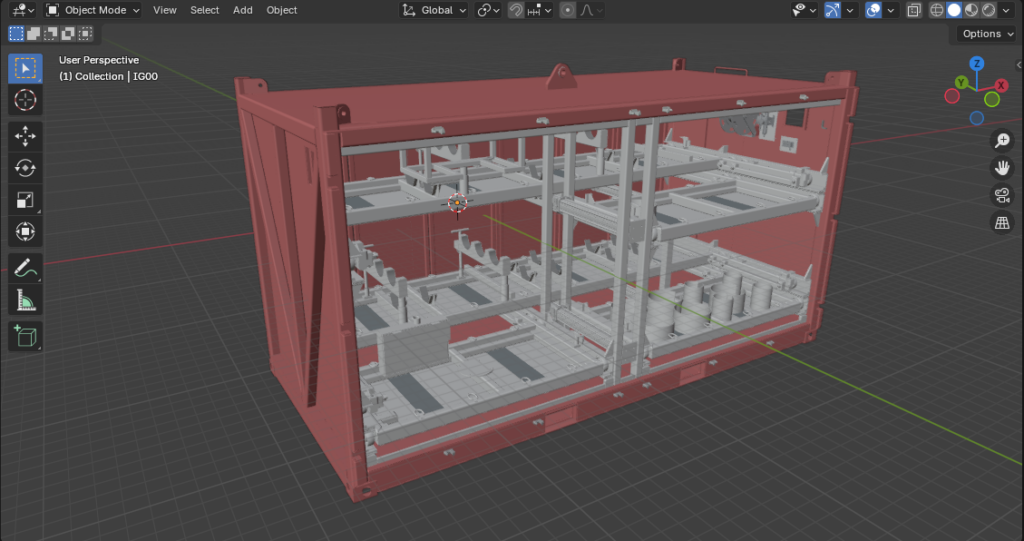
Stage 3 — Updated drawings and documentation. The as-built offshore container documentation must reflect the modified state: construction drawings, weld maps, NDE records, and the calculation report. If a rated parameter changes — payload, design pressure, hazardous area classification — that must be stated explicitly.
Stage 4 — Testing. The certification body may require proof load testing, NDE on critical welds, or both. A structural penetration or lifting point modification typically requires load testing.
Stage 5 — Updated certificate of conformity. The certification body reviews the engineering package, witnesses testing, and issues an updated certificate covering the modification scope.
Offshore Container Re-Certification Timelines
For a modification properly engineered from the start:
- Assessment and engineering: 2–4 weeks depending on complexity
- Testing and surveyor involvement: 2–6 weeks depending on location and certifier availability
- Total: 6–12 weeks
For a modification already made without engineering involvement, the timeline is significantly longer. When the submission is unexpected, additional analysis, third-party verification, or re-testing is commonly required. In these situations, timelines of 4–6 months are not unusual.
The offshore container certification path is faster when it precedes the physical work, not when it follows it.
The Cost of Getting Offshore Container Re-Certification Wrong
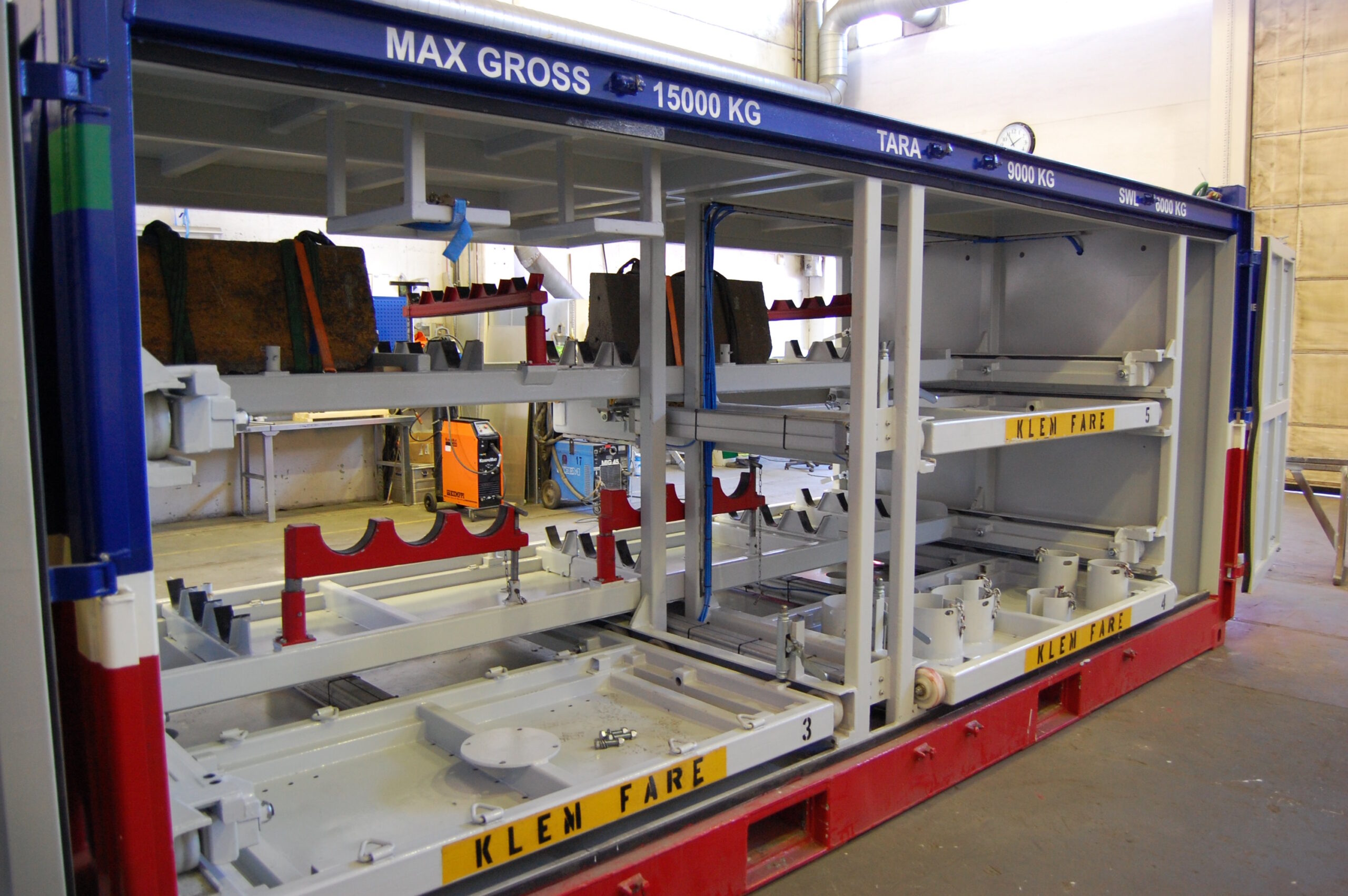
An offshore container that arrives at the quayside with an invalid certificate cannot be mobilised. Operators will not accept it. The project faces a choice: rectify the certification issue before mobilisation, or leave the container on the quay and absorb the delay costs.
Rectifying an uncertified offshore container modification offshore — constrained access, limited equipment, surveyors requiring travel to site — typically costs 5 to 10 times what it would have cost to engineer the modification correctly at the outset.
Beyond direct costs, there are liability implications. Deploying offshore equipment with an invalid certificate creates exposure under applicable safety regulations. Insurers require valid certification as a condition of coverage.
If you have an existing offshore container and a modification in mind — or a modification already made — contact Ingeniat before you proceed. We assess the modification scope against the original certification basis, advise on the re-certification path, and manage the submission to DNV, Lloyd’s Register, or Bureau Veritas.
Share your project requirements below. We’ll review your specifications and respond with a detailed engineering proposal.