Engineering and Project Management
 

NAUTILUS: A New Approach to Maritime Regulatory Compliance Monitoring

Maritime regulatory compliance is a moving target. Between IMO circulars, EU delegated regulations, and Paris MoU inspection regimes, staying current requires constant vigilance. Most operators discover compliance gaps during audits or, worse, after violations. NAUTILUS takes a different approach: continuous automated monitoring with real-time alerting.
What NAUTILUS Does
The system continuously tracks regulatory sources that affect maritime operations:
  • IMO MEPC/MSC — Environmental and safety circulars, resolution amendments
  • EU Official Journal — Delegated acts, implementing regulations (ETS, FuelEU, MRV)
  • Paris MoU — Port State Control updates, inspection focus areas
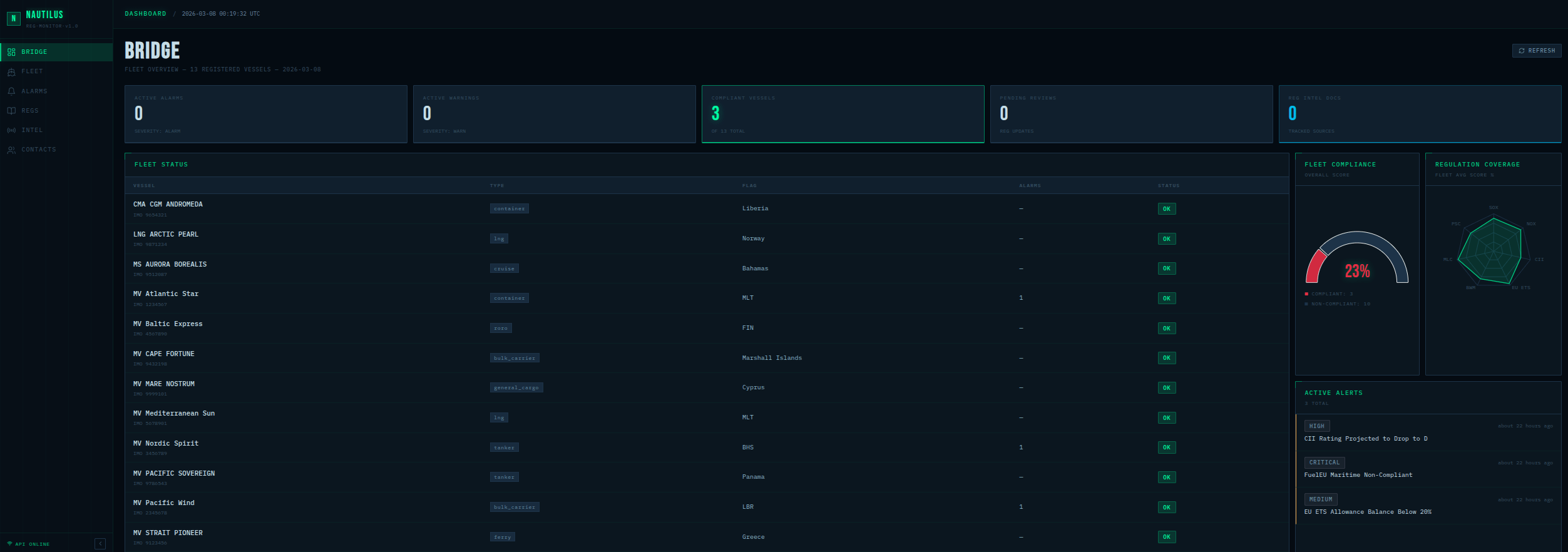
When a new document appears, NAUTILUS parses it, extracts structured data, and compares it against your current compliance posture. If thresholds change, effective dates shift, or new requirements emerge, you know immediately — not during the next quarterly review.
NAUTILUS Dashboard

Continue reading"NAUTILUS: A New Approach to Maritime Regulatory Compliance Monitoring"

Capacity Bandwith Pains

When Your Engineering Team Is at Breaking Point: How Remote Consultants Unlock Capacity Without the Hiring Headache The pain is familiar: project pipeline surged, deadlines are slipping, and your senior engineers haven’t seen a weekend off in months. You’re turning down work—not because the opportunity isn’t there, but because there …

Autonomous Agents in the Maritime and Offshore Industries

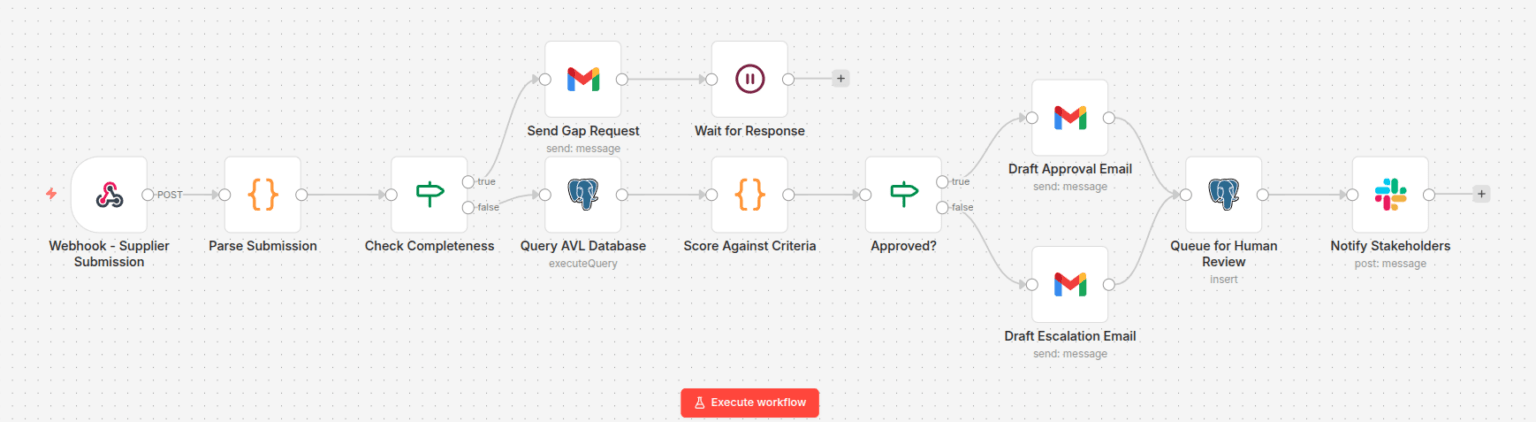
There is a particular kind of professional frustration that anyone who has worked on an offshore fabrication project will recognize. You are a qualified engineer — welding inspector, procurement lead, project quality manager — and you are spending the better part of your afternoon reformatting a certificate that arrived as a scanned PDF into a register that should have been updated yesterday, cross-referencing a heat number against a purchase order you have already checked twice, and drafting a non-conformance report for a deviation you identified six hours ago but haven’t had time to write up properly.

The inspection itself took twenty minutes. The paperwork will take two hours.

This is not an efficiency problem unique to a single project or company. It is structural. Maritime and offshore projects are, by design, documentation-intensive. Classification societies require it. Client quality systems require it. Regulatory frameworks require it. The documentation is not bureaucratic overhead that could be streamlined away — it is the evidence record that proves the physical asset was built correctly. You cannot eliminate it. But you can stop doing it manually.

 
Continue reading"Autonomous Agents in the Maritime and Offshore Industries"

Heating Skid for OCCS Solvent Preheating

The Jacket Water Heat Recovery Skid for OCCS Solvent Preheating is a compact, purpose-built auxiliary unit designed to harvest low-grade thermal energy from the engine’s jacket water (JW) cooling circuit and redirect it into the Onboard Carbon Capture System (OCCS) process as a pre-heating stage for the rich amine solvent stream. Rather …

Engine Room Air Ventilation Upgrade Skid

The International Code of Safety for Ships Using Gases or Other Low-Flashpoint Fuels (IGF Code), as adopted by IMO under SOLAS Chapter II-1, establishes mandatory requirements for vessels operating on alternative fuels such as methanol and ammonia. A central requirement is that machinery spaces containing fuel-handling equipment — bunkering stations, …