The Recent MARPOL Annex V Amendments: A Regulatory Transformation for Small Vessels
Recent amendments adopted by the International Maritime Organization under MARPOL Annex V have reshaped the compliance landscape for commercial vessels of 100 gross tonnes and above. Adopted through IMO Resolution MEPC.360(79) and entering into force on 1 May 2024, these amendments lowered the Garbage Record Book threshold from 400 GT to 100 GT, bringing a significantly larger cohort of smaller vessels within structured regulatory oversight. The 100 to 399 GT segment represents the newly captured population — vessels that carried no such documentation obligation prior to the amendment.
This regulatory expansion has brought thousands of smaller commercial vessels into scope: fishing vessels operating under coastal fishing licences, coastal freighters serving regional trade routes, offshore support craft engaged in wind farm installation and maintenance, workboats and tugs providing port and terminal services, and small commercial operators transporting cargo across short-sea shipping routes. These vessels share a common characteristic — they were designed and crewed for operational efficiency rather than regulatory compliance infrastructure.
The consequences of inadequate MARPOL Annex V documentation have become increasingly tangible. Paris MOU, Tokyo MOU, and United States Coast Guard Port State Control data regularly identify garbage documentation deficiencies among frequently cited violation categories. The outcomes extend beyond administrative inconvenience: vessels face inspection delays, detention notices, financial penalties, and reputational damage that affects charter eligibility and insurance premiums.
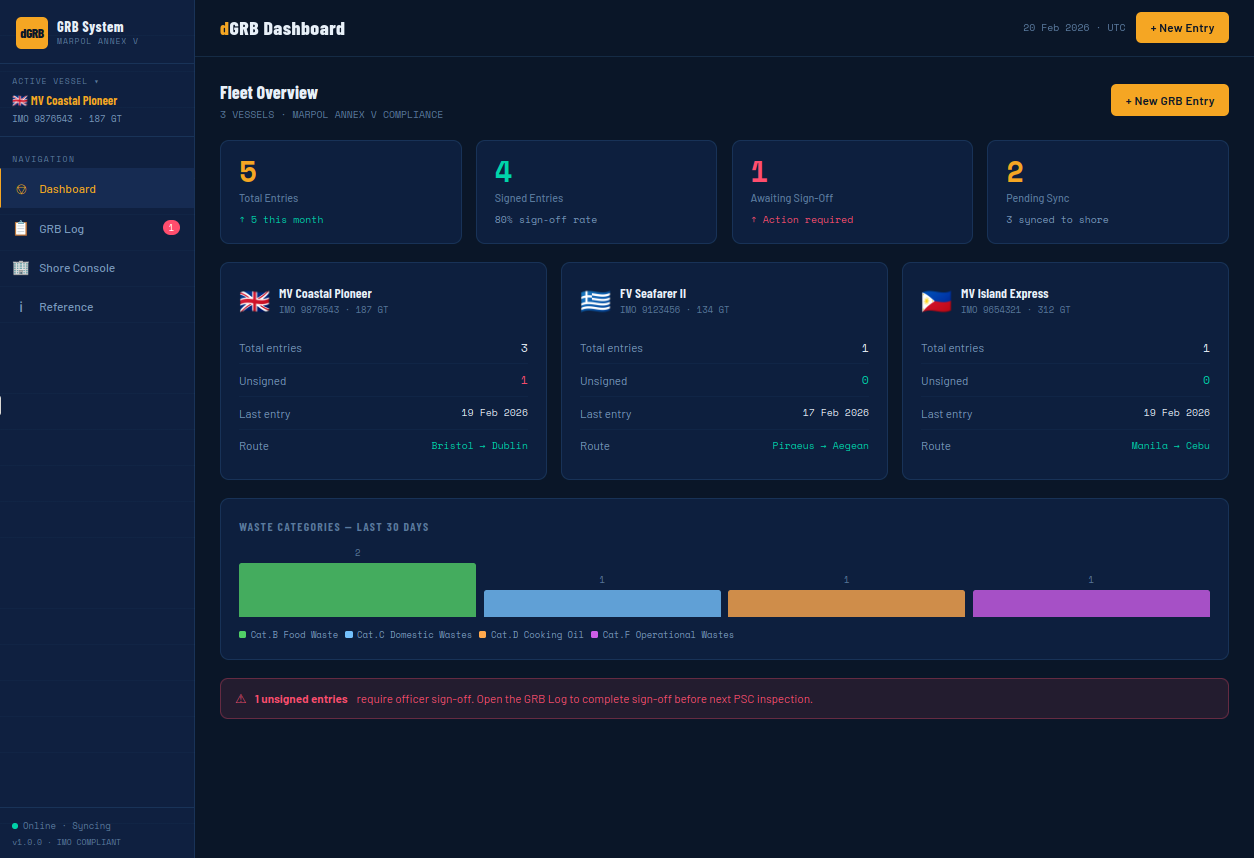
The Digital Garbage Record Book has been developed specifically to address this compliance gap. It provides structured MARPOL Annex V documentation for vessels in the 100 to 399 GT segment without imposing administrative burdens incompatible with lean crewing arrangements and intermittent connectivity patterns.