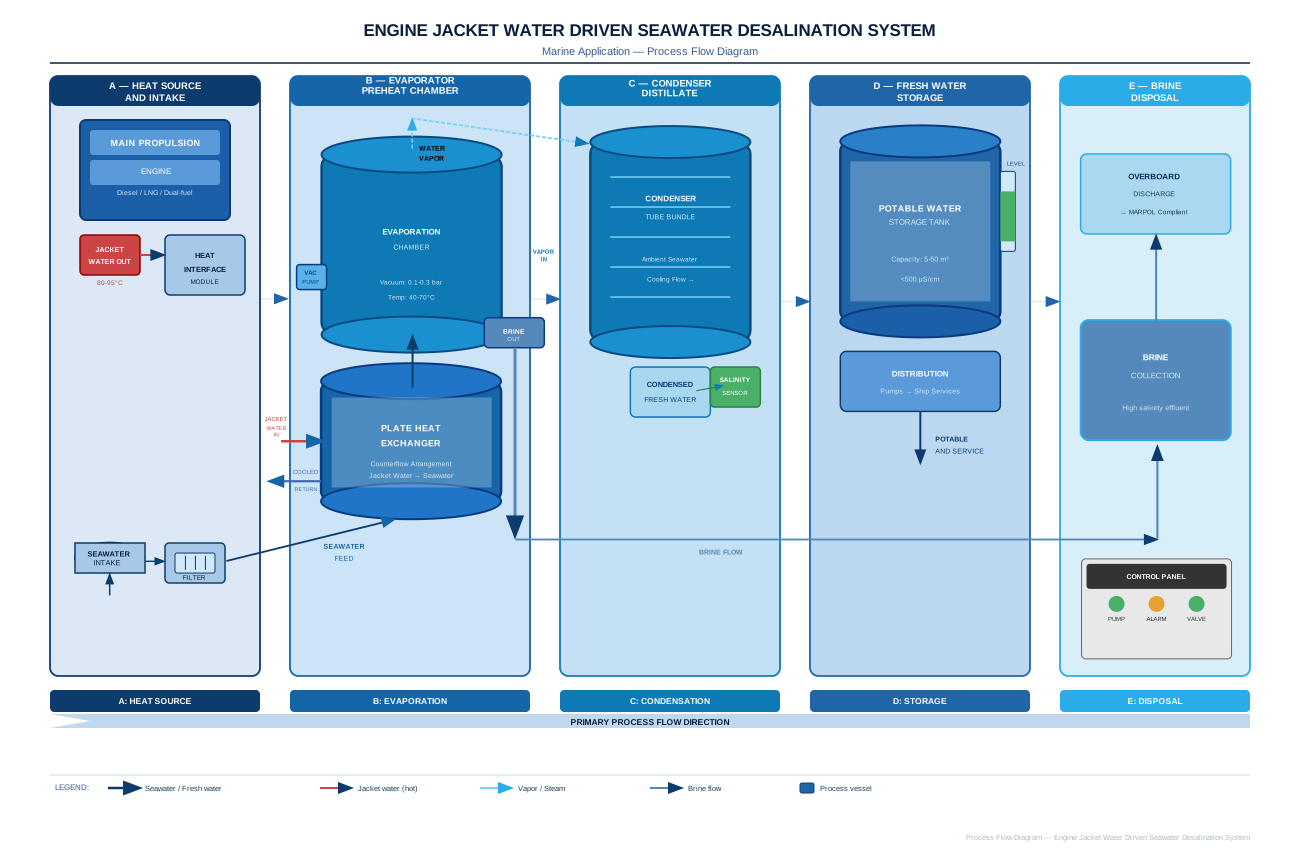
Marine desalination technology designed to utilize the thermal energy available in main engine jacket cooling circuits represents an efficient and integrated approach to meeting fresh water demand on seagoing vessels. Engine jacket water, circulating continuously through the propulsion engine to manage thermal loads, provides a stable heat source that can be harnessed to drive a low-pressure evaporation and condensation cycle for seawater desalination. This process enables the conversion of seawater into potable and process water with minimal additional fuel consumption and without reliance on shore-sourced supplies.
The system comprises a sealed shell within which seawater is introduced and subjected to controlled reduced pressure conditions. The jacket cooling water is routed through an evaporator heat exchange surface, transferring sensible heat to the seawater feed, thereby initiating phase change under vacuum at temperatures significantly below normal boiling point. As the seawater evaporates, the resulting water vapor migrates to a condenser section where ambient seawater cooling circuits extract latent heat, promoting condensation into fresh water. Salinity monitoring systems continuously assess distillate quality, ensuring that the produced water meets stringent marine potable water standards before being routed to storage and distribution systems. Brine rejected after evaporation is discharged overboard in compliance with marine regulatory constraints.
The desalination process itself is inherently continuous during operation: jacket water heat is supplied whenever the main engine is under load, vacuum conditions are maintained by an ejector or dedicated vacuum pump, and automatic controls balance feed, evaporation, and condensing rates. The integration of this technology onboard allows for significant reduction in reliance on carried fresh water, lowers operational costs associated with purchasing and storing potable water at port, and enhances the vessel’s self-sufficiency on long voyages.
Engineering and Implementation Services
To support the delivery, installation, and long-term operation of a jacket water-driven desalination system onboard marine vessels, the following engineering and project services are provided:
- The initial phase involves a comprehensive feasibility assessment and concept engineering. This stage evaluates available engine heat capacity, vessel space constraints, integration points with existing cooling water and seawater piping systems, and preliminary process flow diagrams that reflect anticipated operational profiles. Concept designs outline layout options and provide cost and schedule estimates to inform owners and technical stakeholders.
- Detailed engineering advances the concept into full process design, including equipment sizing, materials selection for corrosion-resistant seawater and brine handling components, and development of Piping and Instrumentation Diagrams (P&IDs). Three-dimensional modelling is undertaken to coordinate with existing engine room arrangements, ensuring structural compatibility and maintenance access.
- Specification of major system components, including evaporators, condensers, ejectors/vacuum systems, and control instrumentation, is undertaken with procurement support. Vendor evaluation and documentation review ensure that selected equipment meets marine classification standards and is fit for purpose within the vessel’s operational regime.
- Integration engineering addresses the interface with the ship’s cooling water and seawater circuits, including modifications to existing pipework and valves. Rigorous safety and risk engineering analyses, such as Failure Mode and Effects Analysis (FMEA), are conducted to mitigate operational hazards and ensure compliance with classification society requirements.
- Detailed installation planning covers procedural development, lift and rigging plans for heavy items, and optimization of shipyard activity sequencing to minimize voyage disruptions. Commissioning support includes witness testing, functional system check-outs, and validation under real-world load conditions. Crew training and development of operator manuals form an integral part of the handover process to empower onboard personnel with the knowledge to maintain and operate the system effectively.
- Post-installation services include lifecycle support through scheduled inspection criteria, optimisation studies for improved production efficiency, and technical assistance for future system upgrades or modifications. Throughout the project, documentation and regulatory submissions are prepared to secure class approvals and ensure that the solution adheres to applicable maritime standards.
We can provide the following engineering services associated with the design and installation of a desalination system using engine jacket water as heat source:
- Feasibility Study and Concept Design:
- Evaluation of space availability and weight considerations
- Preliminary process flow diagrams
- Conceptual layout designs
- Initial cost estimates and project timeline
- Detailed Engineering Design:
- Process engineering and equipment sizing
- Piping and Instrumentation Diagrams (P&IDs)
- 3D modeling of the equipment layout
- Electrical system design and integration
- Equipment Specification and Procurement Support:
- Development of technical specifications for major equipment
- Vendor evaluation and selection assistance
- Review of vendor documentation and drawings
- Structural Modifications Design:
- Reinforcement designs for existing structures if required
- Finite Element Analysis (FEA) for critical structural components
- Integration Engineering:
- Interface design with existing ship systems (e.g., power, water)
- Modification of existing piping systems
- Safety and Risk Engineering:
- Failure Mode and Effects Analysis (FMEA)
- Regulatory Compliance and Classification:
- Liaison with classification societies
- Preparation of documentation for class approval
- Development of procedures to meet regulatory requirements
- Installation Planning:
- Development of detailed installation procedures
- Creation of work packages for shipyard or offshore installation
- Lift plans for major equipment
- Installation sequence optimization
- Commissioning and Start-up Support:
- Development of commissioning procedures
- Supervision of installation and commissioning activities
- Performance of system tests and trials
- Troubleshooting and optimization support
- Documentation and Training:
- Preparation of operating and maintenance manuals
- Development of crew training programs
- Environmental Impact Assessment:
- Analysis of the collection system’s environmental benefits
- Support for environmental permit applications
- Project Management:
- Overall project scheduling and coordination
- Cost control and progress reporting
- Quality assurance and control
- Lifecycle Support:
- Development of maintenance and inspection schedules
- Optimization studies for long-term operation
- Technical support for system upgrades or modifications
- Feasibility Study and Concept Design: