
A technical primer for naval architects, marine engineers, and technical superintendents.
A vacuum toilet on a commercial vessel looks almost identical to the one in your office — same bowl, same seat, same flush button. The difference is everything behind the wall. Where a gravity system relies on a column of water and a 100 mm fall pipe to carry waste downward, a vacuum system uses differential pressure to pull waste through 50 mm piping in any direction. That single design choice is why vacuum collection has become standard on cruise ships, large ferries, naval vessels, and offshore platforms, as Ingeniat and other marine engineering houses routinely point out.
This post is the first in a series on vacuum-based waste collection onboard commercial vessels. It explains the components, the physics, and the design implications — the foundation for the rest of the series.
Core components
A marine vacuum collection system is built from five functional blocks:
- Toilet/collection fixture — A standard vacuum toilet (looks like a regular toilet) with an integrated or nearby interface valve. The flush button triggers a short pneumatic or electric valve cycle.
- Interface valve — A normally-closed valve held shut by the vacuum line. When actuated, it opens for ~2–4 seconds, exposing the bowl to the negative pressure in the line and pulling waste downstream.
- Small-bore piping network — Typically DN50 (50 mm) PVC, PP, or stainless steel, sized to keep flow velocities above ~3 m/s to prevent settling. Risers, horizontal runs, and direction changes are all routine; no minimum fall gradient is required.
- Vacuum pump station — One or more (usually redundant) vacuum pumps — claw, liquid-ring, or rotary vane — that maintain line pressure at roughly −0.4 to −0.7 bar gauge. A vacuum reservoir tank smooths demand peaks.
- Discharge point — Waste is delivered to a holding tank, a sewage treatment plant (STP), or directly overboard (where regulation permits).
The collection network on a cruise ship may serve several thousand fixtures across multiple decks, with grouped vacuum pump stations on each major vertical zone.
The physics in 30 seconds
The interface valve is held closed by the same vacuum that exists throughout the piping network. When a user presses the flush button, three things happen in sequence:
- The interface valve opens, exposing the bowl interior to the line vacuum.
- Atmospheric pressure inside the bowl (~1 bar absolute) is now much higher than the pressure in the line (~0.3–0.6 bar absolute). Waste accelerates into the pipe, driven by that ~0.5 bar pressure differential.
- The valve closes. A small flush water charge (typically 0.5–1.2 L, drawn from the bowl rinse ring) rinses the bowl, readying it for the next user.
The line vacuum is maintained continuously by the pump station. Because pressure differential does the work, the pipe can go up, down, or sideways without losing performance — which is the central engineering advantage.
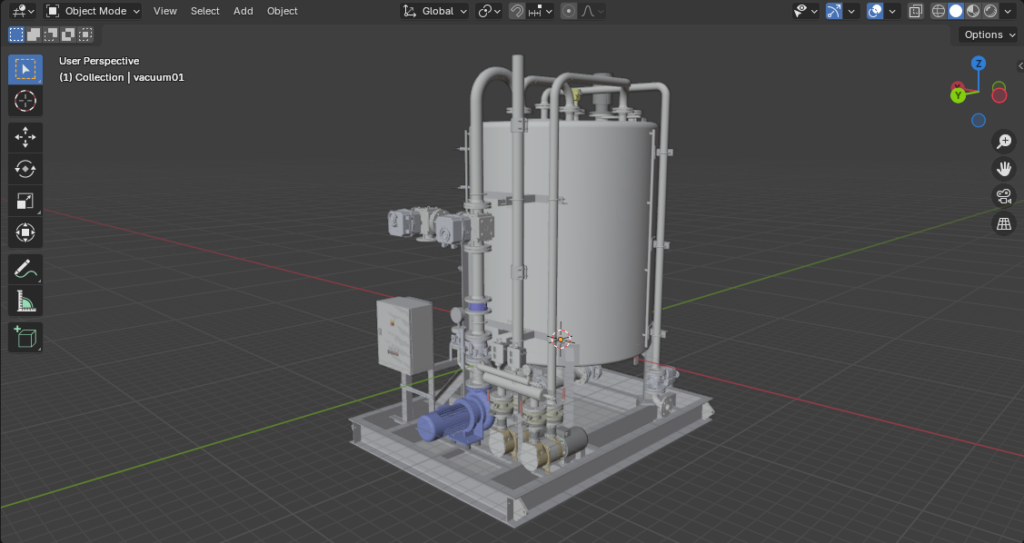
The utilization of vacuum-based waste collection systems typically provides the following advantages:
A. Water Efficiency:
- Vacuum toilets use a fraction of the water required by traditional toilets, significantly reducing the overall water consumption and wastewater generation onboard.
B. Flexible Installation:
- The vacuum system’s ability to transport waste over long distances and through complex routing paths makes it ideal for modern ship designs, where space is often constrained.
C. Improved Hygiene:
- The rapid removal of waste reduces the risk of odor and contamination, contributing to better onboard hygiene and living conditions.
D. Environmental Compliance:
- By reducing wastewater volume and improving waste management efficiency, the system helps ships comply with international environmental regulations, such as MARPOL Annex IV, which governs the discharge of sewage from ships.
E. Space Efficiency:
- Smaller pipe diameters and flexible routing allow for more efficient use of space, which is particularly valuable in the confined environment of a ship.
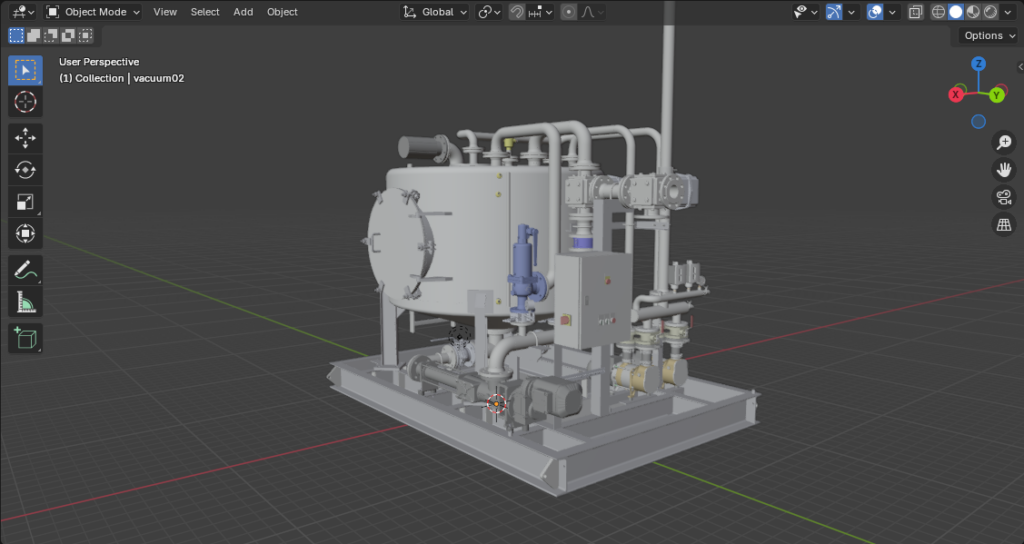
Why small pipes matter on a ship
Ships are dense structures. Stiffeners, tanks, cable trays, ventilation ducting, and machinery casings compete for the same riser spaces. A conventional gravity soil pipe is DN100 (100 mm) and must maintain a minimum fall of 1–2% toward the discharge — that constraint alone forces pipe routes through specific compartments and structural penetrations.
A DN50 vacuum line has roughly one-quarter the cross-sectional area of a DN100 gravity line, and it does not need any fall gradient. The same plumbing layout that needs a dedicated riser column with gravity can often share shaft space with other services when run on vacuum. (Note: this is a widely cited industry advantage; specific savings depend on each vessel’s general arrangement.)
Other knock-on effects on ship design:
- Reduced structural penetrations — fewer and smaller holes through watertight bulkheads and decks.
- Smaller plumbing shafts — more usable area for cabins, corridors, or technical spaces.
- Lighter topweight — a 50 mm PVC line weighs a fraction of a 100 mm cast-iron soil pipe over the same run.
- No trap primers needed — the system is sealed under vacuum, so there is no P-trap to evaporate and no odor path back into the cabin.
Flush volumes and downstream effects
The headline number most shipowners ask about is flush water. Typical figures in industry literature:
| System | Flush volume per use |
|---|---|
| Gravity marine toilet | 4–6 L |
| Vacuum toilet | 0.5–1.2 L |
(These ranges are commonly cited by manufacturers such as Jets™/Evac and by classification society guidance documents. Confirm exact figures against your selected equipment’s technical datasheet before specifying.)
Multiplying that saving across a vessel’s daily flush count produces the water and energy figures used in the sustainability case for vacuum systems — which we’ll cover in detail in a later post in this series.
What to read next
If you’re at the concept-design or retrofit feasibility stage, the natural next step is the installation walkthrough — link below.
Further reading:
Need a feasibility study or design review? Reach out via Ingeniat’s engineering services channel.
Vacuum-based waste collection systems are commonly used on a variety of ships, including cruise ships, ferries, naval vessels, and large commercial vessels. They are particularly advantageous in ships where minimizing water usage and maintaining high hygiene standards are critical, such as passenger ships and offshore platforms. Further information regarding the installation of vacuum-based waste collection systems can be found through the following link.