Language Model Fine Tuning is the AI service that transforms generic large language models into specialized, domain-expert systems tailored to your equipment, processes, and operational data. We don’t sell software licenses. We don’t push subscription platforms. We build custom-tuned language models that understand your equipment manuals, integrate your maintenance logs, analyze service engineer feedback, and deliver precise, contextual, actionable guidance that off-the-shelf AI simply cannot provide.
The marine, oil & gas, and industrial sectors generate massive amounts of technical documentation and operational data. Every piece of equipment has manuals, service histories, and engineering specifications. Every maintenance cycle produces reports. Every service engineer accumulates tribal knowledge. Every customer provides feedback. But for the vast majority of fleet operators — particularly those managing 5 to 100 vessels — that knowledge exists in fragmented, inaccessible formats. Manuals sit in archives. Service reports are scattered across systems. Customer feedback lives in email inboxes. Tribal knowledge resides in the minds of experienced engineers who may leave tomorrow.
According to industry assessments, over 70% of technical knowledge in industrial operations remains trapped in unstructured documents and human memory, inaccessible to the engineers who need it most. When a critical piece of equipment fails, engineers spend hours — sometimes days — searching through manuals, cross-referencing reports, and consulting colleagues before they can begin effective troubleshooting. That’s not a digital transformation story — that’s a knowledge accessibility crisis costing time, money, and operational reliability every single day.
When an operations team invests in AI tools and language models, they quickly discover that generic models are inadequate for technical domain work. Ask a general-purpose AI to diagnose a specific pump failure, and it hallucinates. Ask it to interpret equipment-specific maintenance procedures, and it provides generic advice that could be dangerous. Off-the-shelf AI doesn’t know your equipment. It doesn’t understand your operational context. It doesn’t have access to your technical documentation. And yet, despite this being the single biggest blocker to practical AI deployment in industrial maintenance, virtually no one offers accessible, domain-specific language model fine-tuning as a service. Every AI vendor sells you a general model with a RAG wrapper. Every platform assumes you can build your own domain expertise. And every operations team is left with AI tools that look impressive in demos but fail in practice.
What We Do
Domain Knowledge Integration & Data Preparation
We begin every engagement by collecting and structuring your domain-specific knowledge. We don’t just dump documents into a database — we systematically curate, clean, and prepare your technical assets. This includes equipment manuals and service documentation, service engineer reports and field notes, customer feedback and operational reviews, maintenance logs and historical failure records, and engineering specifications and design documentation.
This isn’t just data collection. We understand technical documentation — how to structure maintenance procedures, what failure modes are critical, how service reports encode operational knowledge. We prepare your data specifically for fine-tuning, ensuring the model learns from high-quality, authoritative sources rather than noisy or outdated information.
Language Model Fine-Tuning & Training
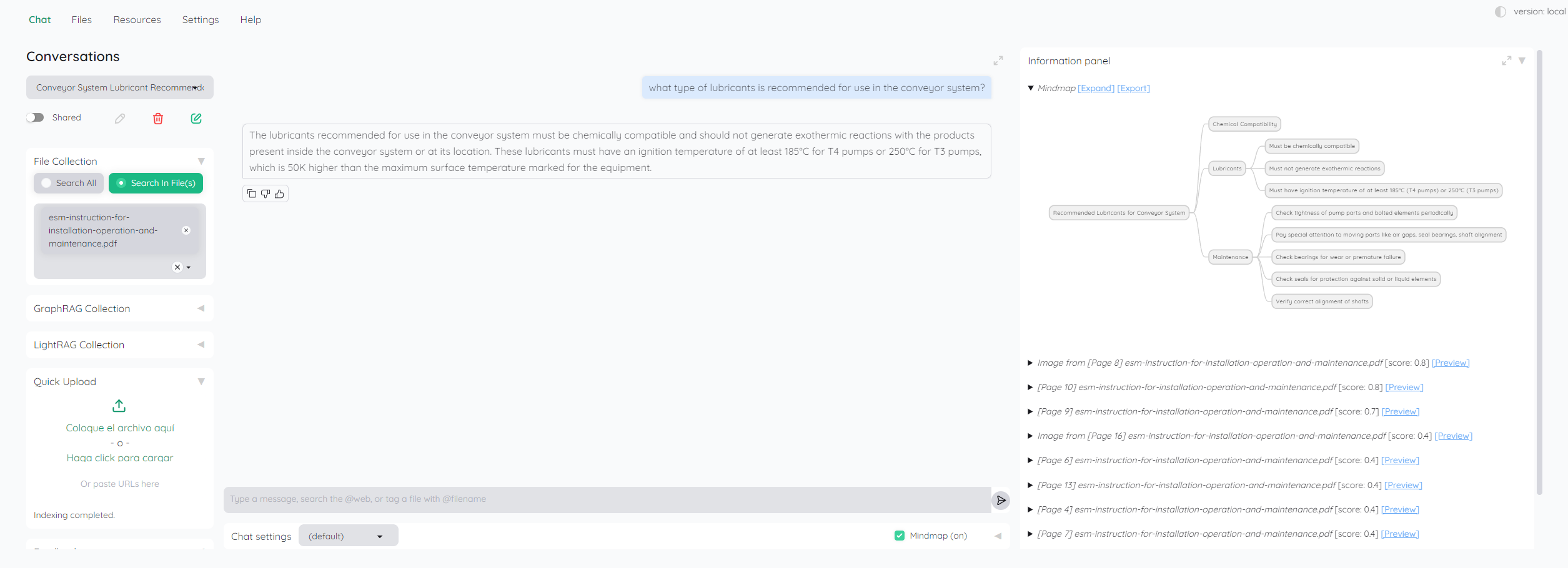
Once your data is prepared, we fine-tune a base language model specifically for your domain. This goes far beyond Retrieval-Augmented Generation (RAG). While RAG connects a general model to an external knowledge base, fine-tuning actually modifies the model’s weights so it internalizes your domain knowledge. The result is a model that doesn’t just retrieve information — it understands your equipment, speaks your technical language, and provides contextually appropriate guidance.
We train the model on your specific equipment types, maintenance procedures, and failure modes. We incorporate service engineer feedback patterns so the model learns from real-world experience. We integrate customer insights so the model understands operational realities. The model becomes a domain expert that can answer technical questions, diagnose problems, and recommend procedures with a level of specificity that generic AI simply cannot match.
Real-Time Support & Diagnostic Integration
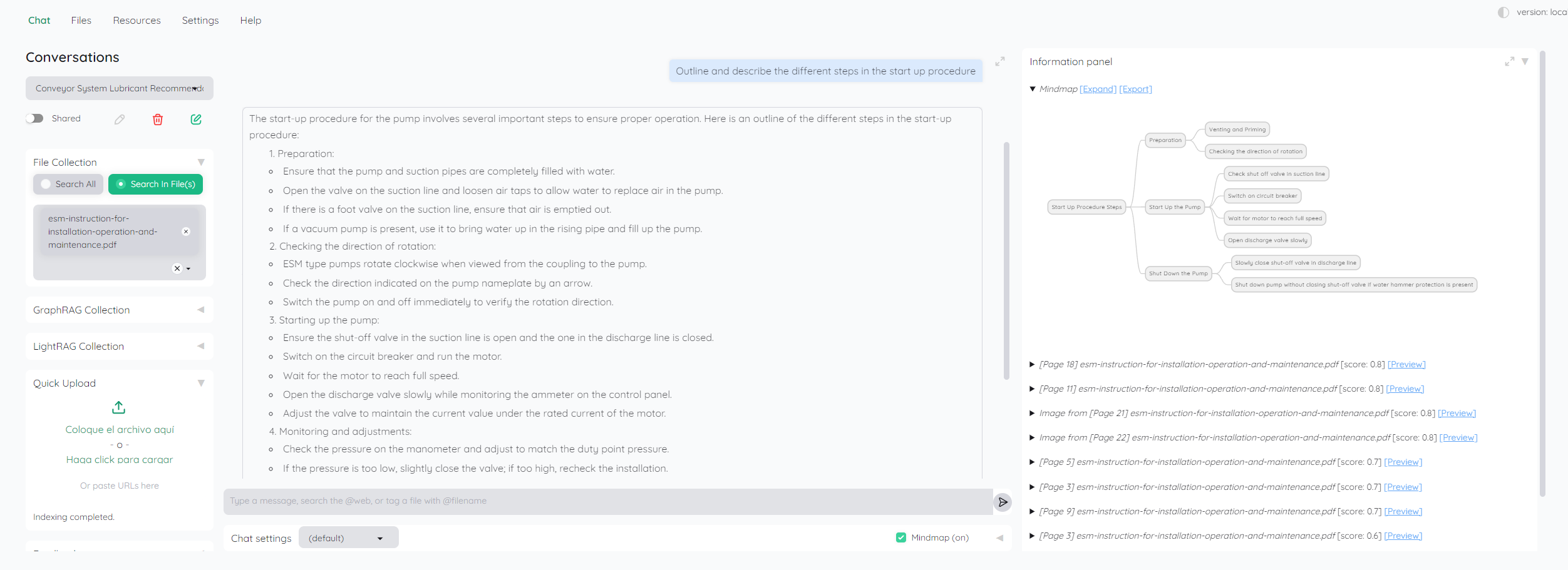
We integrate the fine-tuned model into your operational workflows. Engineers can query the model in natural language — “Why is pump model X overheating under load?” — and receive precise, contextual answers based on your equipment manuals, historical failure data, and service engineer feedback. The model suggests specific maintenance tasks for wear-prone components. It highlights design flaws based on recurring feedback patterns. It enables faster diagnosis and reduces the time between problem identification and resolution.
We don’t just deliver a model — we deliver a working system integrated into your daily operations. Field technicians get real-time support. Maintenance planners get predictive insights. Engineers get rapid access to consolidated technical knowledge.
Continuous Improvement & Feedback Loop
The fine-tuned model improves over time. We establish feedback loops where service engineers and maintenance teams can rate model responses, flag inaccuracies, and provide new information. This continuous feedback cycle allows the model to evolve alongside your operations, incorporating new failures, new procedures, and new insights.
We monitor model performance, track usage patterns, and identify areas for improvement. The model becomes smarter and more accurate with every interaction, ensuring long-term value and relevance as your operations and equipment evolve.
Why This Matters Right Now
The industrial and maritime sectors are under increasing pressure to improve operational efficiency and reduce maintenance costs. Equipment downtime costs are rising. Technical expertise is becoming scarcer as experienced engineers retire. AI capabilities are advancing rapidly, but generic models remain inadequate for domain-specific technical work. Fine-tuned language models represent a fundamental shift — from reactive troubleshooting to proactive, AI-assisted expert knowledge access.
Generic AI Is Not Enough
Every operations team we talk to is interested in AI. They’ve seen the demos. They understand the potential. But when they try to use general-purpose models for technical work, they hit a wall. The models hallucinate. They provide generic advice. They don’t understand equipment-specific procedures. They can’t interpret technical documentation accurately. A RAG wrapper helps, but it’s not enough for mission-critical technical support. Our fine-tuning service delivers domain-specific expertise that generic AI simply cannot match.
Competitive Advantage Through Knowledge Access
Operations teams who deploy fine-tuned language models first achieve something their competitors can’t match: instant access to consolidated technical expertise. They diagnose equipment problems faster. They reduce troubleshooting time. They preserve tribal knowledge that would otherwise be lost when experienced engineers leave. They enable less experienced technicians to perform at higher levels. In an industry where expertise is scarce and downtime is expensive, teams with fine-tuned AI have a decisive advantage.
Technology Is Mature and Proven
Language model fine-tuning for industrial and maritime applications is mature and proven. The techniques — domain-specific training, instruction tuning, feedback-based refinement — are established and reliable. The infrastructure for training and deploying fine-tuned models is accessible and cost-effective. The barrier isn’t technology availability. It’s the expertise to properly curate domain data, fine-tune models effectively, and integrate them into operational workflows. That’s where we come in.
Operational Impact — Fine-Tuned Model Value
How fine-tuned language models enhance equipment maintenance and operational effectiveness across every application area
Knowledge Accessibility Score — Higher = More Critical Domain-Specific AI Required
| Application Area | Category | Fine-Tuning Value |
|---|---|---|
| Equipment Manuals | Technical Information Access | 98% — Precise manual extraction, procedure interpretation, compliance guidance |
| Service Engineer Feedback | Problem Pattern Recognition | 95% — Recurring issue identification, improvement area detection, strategy optimization |
| Customer Reviews | Real-World Performance Insights | 92% — Operational concern analysis, reliability improvement, proactive maintenance planning |
| Maintenance Logs | Predictive Maintenance | 90% — Failure pattern analysis, component lifespan prediction, optimal scheduling |
| Design Documentation | Engineering Knowledge Base | 88% — Design flaw identification, specification cross-referencing, engineering decision support |
| Training & Onboarding | Knowledge Transfer | 85% — Procedure training, troubleshooting guidance, expertise preservation |
Benefits
The use of a finely tuned language model in equipment maintenance offers several significant benefits that can enhance efficiency, accuracy, and overall operational effectiveness, benefits such as:
- Access to Technical Information: A language model can quickly and efficiently extract detailed information from equipment manuals, reducing the time spent manually searching through vast documentation.
- Feedback Analysis: By analyzing feedback from service engineers, the model can identify recurring issues or areas for improvement, leading to optimized maintenance practices.
- Customer Insights: Incorporating customer reviews provides real-world insights into equipment performance, helping to anticipate and address potential problems before they become major issues.
- Efficiency and Proactiveness: The model can process information rapidly, enabling faster response times to unexpected issues and minimizing downtime.
- Reduction of Human Error: Consistency in handling complex tasks through AI can reduce errors that might arise from manual processes.
- Predictive Maintenance: Utilizing historical data and feedback, the model can predict equipment failures proactively, allowing for scheduled maintenance at optimal times.
- Insightful Reporting: The ability to generate reports based on analyzed data provides valuable insights into equipment performance, aiding informed decision-making and resource allocation.
- Scalability: The model can handle diverse inputs efficiently, making it suitable for large-scale operations as the number of machines increases.
- Cost-Effectiveness: By reducing downtime and labor costs associated with manual data analysis, the long-term benefits of a language model investment are significant.
- User Experience Enhancement: Seamless integration into existing systems improves workflow without causing disruptions, ensuring efficient operational flow.
While challenges such as potential over-reliance on AI, specialized knowledge gaps, and the need for continuous data updating exist, these can be mitigated with proper training and integration strategies. Overall, a finely tuned language model has the potential to revolutionize equipment maintenance by making it more efficient, accurate, and proactive.
Key Capabilities
- Domain Knowledge Integration — Consolidate manuals, service reports, and operational data into a unified knowledge base
- Custom Model Fine-Tuning — Train specialized language models on your specific equipment and procedures
- Real-Time Diagnostic Support — Natural language querying for rapid equipment troubleshooting and maintenance guidance
- Continuous Improvement — Feedback loops that evolve the model alongside your operations
- Scalable Expertise — Extend domain knowledge across your entire fleet or organization
Find out how we can help, contact us for further information.